Last Updated on April 25, 2026 by Alex
Alex here. In 2026, obtaining Permanent Residency (PR) in Belgium is more than just a formality—it is a legal shield against annual renewals and checks. The Immigration Office (IBZ) has tightened its grip: simply “staying” in the country for 5 years is no longer enough. You must now demonstrate economic contribution and successful integration.
Securing this status today typically means obtaining an L or K card, granting rights nearly identical to citizenship. This guide covers only the latest 2026 requirements, financial thresholds, and a step-by-step roadmap to ensure your status isn’t revoked due to a bureaucratic oversight.
How to Get Permanent Residency in Belgium in 2026
To qualify for PR in Belgium in 2026, you must meet the following criteria:
- 5 years of continuous legal residence;
- A minimum monthly income of €2,408.79;
- Proven language proficiency (minimum A2 level);
- Fulfilled social integration
Types of Permanent Residency in Belgium: Which Card to Choose?
As you approach the 5-year residency milestone, you will face a choice between several permit types. Many expats mistakenly accept whatever the “commune” offers, but I recommend looking closer at the details.
| Type | Official Status | Validity | Key Advantage | Registry |
| B | Right of residence for third-country nationals | 5 years | Easier application process | Foreigners’ Register |
| L | EU Long-term Resident status | 10 years | Right to work in other EU countries | Foreigners’ Register |
| K | Settlement Permit | 10 years | Full access to social security rights | National Register |
| F+ | PR for family members of EU citizens | 5 years | Maximum protection against deportation | National Register |
| EU+ | PR for EU citizens | 10 years | Automatic right to permanent stay | National Register |
B Card (Certificate of Registration in the Foreigners’ Register)
In 2026, the B Card remains the most fundamental and fastest way to secure residency for an indefinite period. The main advantage of this status is complete independence from your employer. Unlike the temporary Single Permit, the B Card is granted based on your 5-year residency track record, not a specific labor contract. This means you can change jobs, go freelance, or even take a career break without risking your right to live in Belgium.
Upon receiving this card, you remain in the “Foreigners’ Register”. This provides a stable legal foundation and access to all social security guarantees, including full unemployment benefits and health insurance. The physical card is valid for 5 years, and in 2026, renewal in most communes is virtually automatic.
Technical Features and Limitations:
- Local Status: The B Card is only valid within Belgium. Unlike the L Card, it does not simplify the process of moving or working in other EU countries.
- Right of Absence: You can stay outside of Belgium for up to one continuous year. The only requirement is to maintain your official registration (address) in your commune.
- Labor Market Access: You gain unrestricted access to any job vacancies and the right to self-employment without needing additional permits.
- Social Package: You become eligible for benefits previously unavailable to holders of temporary cards, though some specific payments from the “National Register” may still be restricted.
Official Resources for Verification:
- IBZ: Change of status to an unlimited period — Official conditions for transitioning to permanent stay.
- be: Rights to social assistance — Detailed description of rights for residents in the Foreigners’ Register.
Alex’s Take:
The B Card is your shortest path to freedom from “Single Permit slavery.” If your goal is to quit your job and start working for yourself as quickly as possible, don’t waste time waiting for the more complex L Card. With a B Card, you can apply for Belgian citizenship the very next day after receiving it, as it officially confirms your status as a permanent resident.
L Card (Long-term Resident – EU): The “Gold Standard”
The L Card is arguably the most beneficial format of Belgian PR available in 2026 for highly skilled migrants. The key difference from “standard” cards is that your right to permanent residency is recognized by other EU member states. In 2026, this is the most stable legalization route for those who don’t want to limit themselves to one country but aren’t ready or able to apply for citizenship yet.
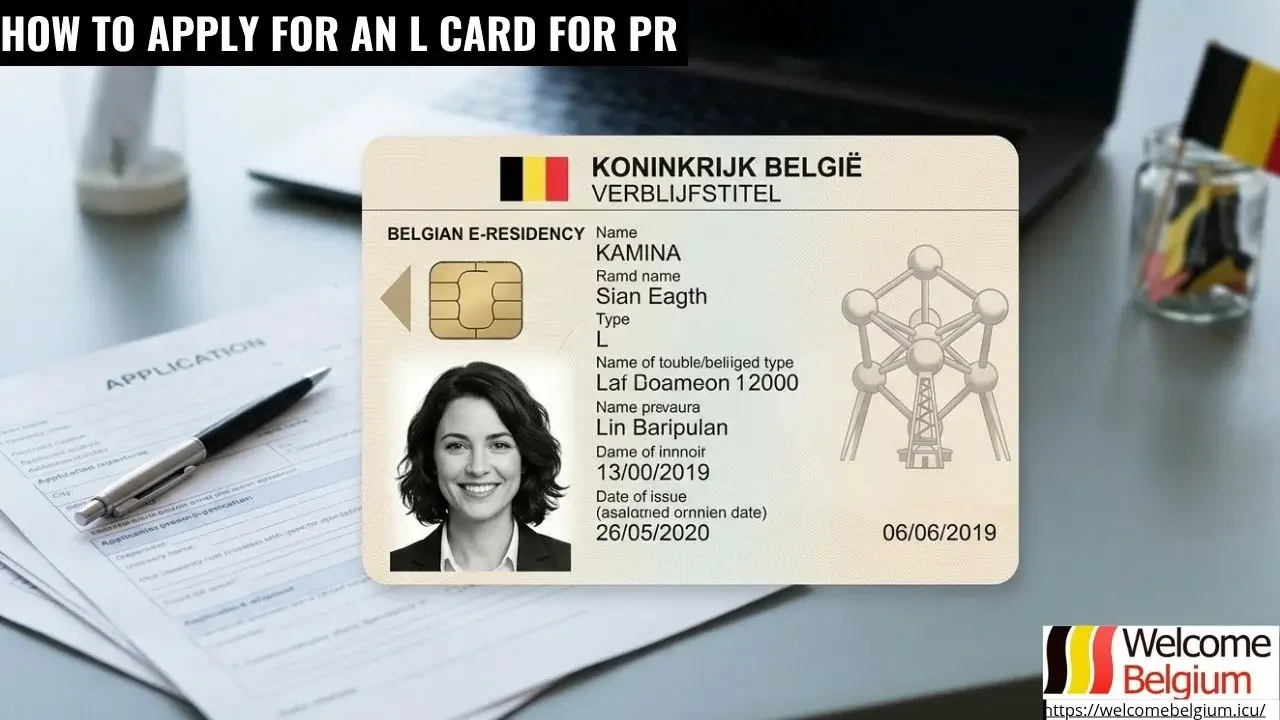
The EU Long-term Resident status grants you nearly the same social and economic rights as Belgian citizens. This applies not only to labor market access but also to taxation, higher education, and the recognition of professional diplomas. If you plan to work for international corporations or move between offices in different European capitals, the L Card will be your primary advantage.
Key Advantages and Mobility of the L Card:
- Validity: The physical card is issued for 10 years, eliminating frequent visits to the commune and extra administrative fees.
- European Mobility: You gain the right to move to other EU countries (excluding Ireland and Denmark) under a simplified scheme. You won’t need to apply for a Visa D from your home country—the legalization process in the new EU country happens on the spot.
- Social Parity: Your rights to social security, benefits, and tax incentives are as close as possible to those of European passport holders.
- Status Protection: You can be absent from the EU for up to 12 consecutive months, or up to 6 years within the rest of the EU (outside Belgium), without losing your long-term resident status.
Official Resources for Verification:
- IBZ: EU Long-term Resident (Status L) — Full list of requirements and benefits on the Immigration Office portal.
- European Commission: Long-term Residents’ Rights — How your card works when moving to other European countries.
Alex’s Advice:
If you are an IT specialist or a highly skilled professional, don’t listen to commune officials who say “B is the same thing.” It’s not. The L Card is your insurance policy. With it, you can get a job offer from Berlin tomorrow and move there while keeping your European status. Demand it, even if the document check takes a couple of months longer.
K Card (Settlement Permit): Status for Those Who Have Settled
If your life plans are centered primarily on Belgium and you want to feel as secure as possible, the K Card is your best choice. Unlike other permits, this status is officially referred to as “Settlement”. This means the state no longer views you as a temporary resident but recognizes you as a full participant in the social system, on par with Belgian citizens.
The main technical “pro” is the change of registries. You are transferred from the general Foreigners’ Register to the National Population Register. From a bureaucratic standpoint, this erases most boundaries between you and a Belgian passport holder. You become “one of their own” for all state services, from the tax office to the pension fund.
Advantages and Features:
- Validity: The physical card is issued for 10 years, confirming the long-term nature of your intentions and saving you from frequent administrative visits.
- National Register: Moving to the Population Register opens access to extended social benefits that are unavailable to holders of A, B, or even L cards (for example, specific disability allowances or guaranteed income for the elderly).
- Bureaucratic Ease: Many processes—from securing bank loans to enrolling children in schools or interacting with the commune—become faster and simpler, as you hold the same administrative status as Belgians.
- Political Participation: You gain the right to vote in municipal (local) elections, allowing you to have a real impact on the life of your neighborhood or city.
Official Resources for Verification:
- IBZ: Settlement (K Card) — Official description of the status on the Immigration Office portal.
- be: Population Registers — Clarification of the difference between the Foreigners’ Register and the National Register.
Alex’s Take:
The K Card is the perfect “anchor.” If you don’t plan on moving to Berlin tomorrow and value maximum social protection within Belgium, choose this one. It provides a level of peace of mind that even EU Long-term Resident status cannot match. But remember: income requirements here are checked just as strictly as everywhere else.
F+ and EU+ Cards: The Path for “Insiders”
These permits stand apart as they are based not only on Belgian law but also on European directives regarding the freedom of movement. If you are a family member of an EU citizen or an EU citizen yourself, these cards are your ultimate goal in the legalization process. In this case, Permanent Residency status confirms that you have acquired a permanent right of abode, which no longer depends on having a job or the income level of a sponsor.
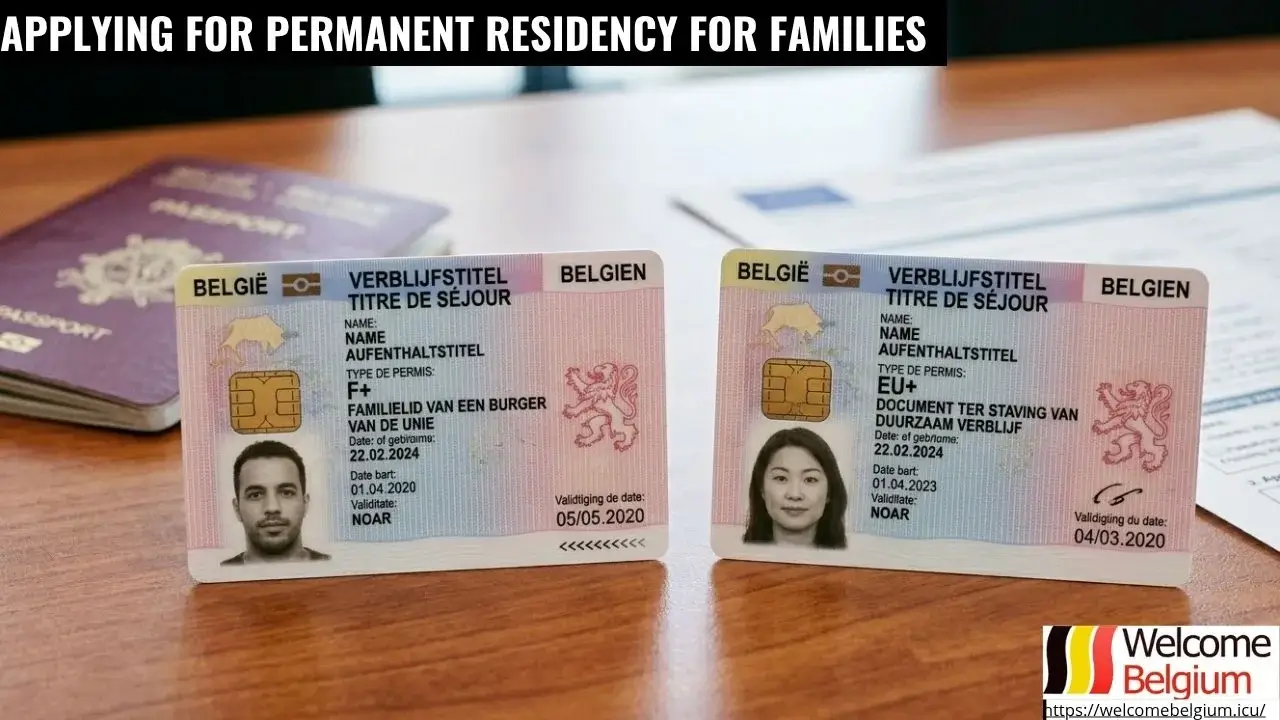
The main trump card of these permits is their unconditional nature. While regular PR (B, L, K cards) can still be lost due to very long absences from the country or criminal offenses, the “Plus” status grants near-immunity. You become part of the National Population Register and enjoy all the benefits of the Belgian social system without restriction.
Features for EU Citizens and Their Families:
- EU+ Card (Permanent Residence Document): Issued to EU citizens after 5 years of continuous residence. This is a lifelong right to live in Belgium. The physical card is renewed every 10 years, but the “Permanent Resident” status stays with you forever.
- F+ Card (Permanent Residence Card): This is PR for family members of EU citizens who do not hold an EU passport themselves. In 2026, this is the most protected status for “third-country” migrants. It offers maximum protection against deportation and full access to the labor market.
- Social Rights: Holders have priority access to social housing, scholarships, and grants. The card is valid for 5 years (for F+), but the right of residence is indefinite.
Official Resources for Verification:
- IBZ: Right of Permanent Residence (EU) — Official guide on obtaining EU+ and F+ status.
- Your Europe: Permanent residence for non-EU family members — European Commission portal explaining your rights at the EU level.
Pro Tip:
If you are living in Belgium through family reunification with an EU citizen (non-Belgian), the F+ Card is your “ticket to eternity.” Once you obtain it, your right to stay in the country no longer depends on whether you still live with your sponsor. It is total autonomy. If your 5 years are up—run to the commune and demand the “Plus”; it eliminates all immigration risks at once.
Requirements for Permanent Residency in Belgium in 2026
Transitioning to permanent resident status is the most critical stage of your legalization. In 2026, Belgium’s migration policy has shifted toward an “integration-based model”: the state no longer settles for your mere physical presence. For your L, B, or K card application to be approved, you must meet three key pillars: financial independence, social integration, and a clean legal record.
Below, we detail the specific “filters” set by the Immigration Office (IBZ) this year and how to prepare your documents to avoid rejection.
The Main Condition: The 5-Year Rule (Uninterrupted Residence)
This timeframe is the cornerstone for anyone planning to apply for PR in Belgium under the 2026 regulations. To become a permanent resident, simply holding an A-card for five years is not enough. The Immigration Office (IBZ) verifies your actual presence in the country using EES (Entry/Exit System) data and municipal registers. Any significant gap in residency resets your progress, forcing you to start the five-year cycle over.
Key Residency Requirements in 2026:
- Absence Limits: You cannot be outside Belgium for more than 6 consecutive months. In total, your absences over the 5-year period must not exceed 10 months. Check the latest IBZ rules.
- Student Credit: Years spent on a student residence permit count toward the 5-year PR requirement at only 50%. For example, a four-year Bachelor’s degree provides only 2 years toward an L-card. Details are available on the Stad Gent portal.
- Internship Status (CIP): A professional internship is treated similarly to education. One year of practice counts as 6 months of residency toward your total. See the official Working in Belgium guide.
- Continuous Registration: You must maintain a registered address (domicile) in Belgium. De-registering from your commune when moving abroad acts as an automatic “stop signal” for your PR counter.
Many expats fall into the trap of working remotely from warmer climates during the winter, exceeding the 183-day limit. In 2026, automated border controls have eliminated the possibility of “negotiating” with officials. If you are planning a business trip or a long vacation, always save your flight tickets and work schedules—only documented exceptional cases (illness, employer’s orders) can save your status if limits are exceeded.
If you moved for work, remember that your current status directly depends on meeting contract conditions and income levels. To ensure you don’t lose your accumulated residency years, check out our latest Guide to Single Permit in Belgium 2026, where we break down which professions offer the fastest path to PR.
Important:
Many mistakenly believe that a residence permit is granted automatically by Belgium, but in reality, the 5-year residency track is just the foundation. It is vital that your stay has been both legal and uninterrupted throughout this entire period.
Approval Criteria: Income, Integration, and Language
Permanent Resident status in Belgium is granted to those who have proven their autonomy. The state wants to be certain that you will not become a burden on the social welfare system (CPAS/OCMW) the day after receiving your indefinite card.
What the Commission checks in 2026:
- Financial Threshold: Your net monthly income must be at least €2,408.79 for a family (indexed as of April 1, 2026). This amount increases by 10% for each dependent. Check current IBZ thresholds.
- Language Standard A2: For L and K cards, an A2 level certificate (in Dutch, French, or German) is now mandatory. See the Language Requirements Guide on Vreemdelingenrecht.
- Integration Contract: Completing the Inburgering (civic integration) course is your strongest “trump card.” In 2026, the risk of rejection for an L card application rises to 60% without this certificate. Visit the Flanders Integration Portal.
It is worth noting that income thresholds are reviewed annually and depend on your current permit type. To ensure your salary meets migration standards and doesn’t lead to a rejection, consult the section on New salary thresholds for work permits in Belgium in 2026.
It is crucial to understand that income must be “stable and regular.” One-time bonuses, cryptocurrency gains, or financial aid from relatives are not considered by the Immigration Office. If your contract expires a month after applying for PR, it may lead to a rejection. The ideal scenario is an open-ended contract (CDI) or proven self-employment income over the last 2-3 years.
PR in Belgium 2026: No Criminal Record
A criminal past or even minor legal infractions have become a major filter in 2026. When reviewing an L or K card application, the Immigration Office requests an extract from the criminal record (Extrait du casier judiciaire). Any “stain” on this record can be legal grounds for rejection due to “threat to public order.”
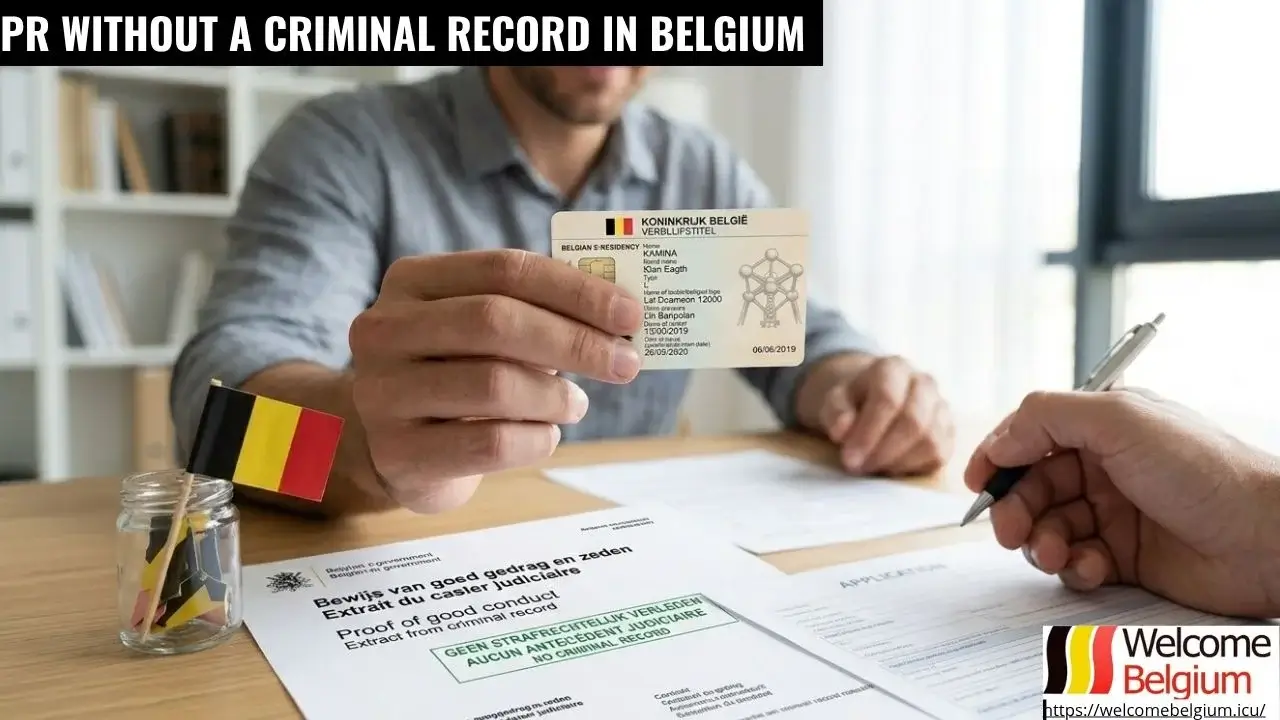
How infractions affect your status in 2026:
- Criminal Offenses: A criminal record almost guarantees a rejection. Even if the sentence is suspended, it signals to the IBZ that you have not integrated into the Belgian legal framework.
- Administrative Fines: Single parking tickets are not critical. However, systematic traffic violations (speeding, DUI) or unpaid municipal fines can be interpreted as a disregard for the country’s laws.
- Tax Compliance: Debts to the tax authorities (SPF Finances) are equated to financial unreliability. This is a direct path to rejection, as you fail the criteria for economic stability. See the Official Belgian Justice Portal.
Your legal cleanliness is the guarantee that your permanent resident status will be approved by the Belgian authorities in 2026. If you have unpaid fines or ongoing legal disputes, settle all debts with the state first before submitting your file. The immigration office does not hesitate to check even the smallest details.
Alex’s Take:
Do not try to trick the system with “fake” income statements. In 2026, the tax office (SPF Finances) and the immigration office work within a unified digital framework. If your tax declarations don’t match the numbers in your PR application, you won’t just get a rejection—you might get a ban on re-applying. First, stabilize your income, get your A2 certificate, and only then head to the commune.
Documents for PR in Belgium: Full 2026 Checklist
Preparing your file is the most time-consuming stage. To understand how to obtain PR in Belgium without repeated visits to the town hall (commune), you must gather a package of documents that proves you meet all integration criteria. In 2026, the Immigration Office (IBZ) prioritizes digital copies, but you must always have the originals on hand.
Among other papers, your file must include a valid Belgian residence permit (A card). You should submit your PR request within the 3-month “window” before your current permit expires.
Core Document Checklist for Submission:
- Valid Passport: Must be valid for at least the duration of the processing period (minimum 6 months).
- Current A Card: The original and a copy of your temporary resident card.
- Criminal Record Extract (Extrait du casier judiciaire): A document confirming a clean legal record in Belgium.
- Proof of Fee Payment: A receipt for the administrative fee paid to the IBZ.
- Language Proficiency Certificate: Proof of at least A2 level
- Proof of Financial Stability: Employment contract (CDI) and payslips (fiches de paie) for the past several months.
The main requirements for PR in Belgium include not only having these papers but also ensuring they are correctly formatted. All foreign certificates must have an apostille and an official translation into one of Belgium’s national languages.
How to Get PR in Belgium in 2026: A Step-by-Step Guide
Becoming a permanent resident begins at your local commune. In 2026, the procedure is strictly regulated: the Immigration Office (IBZ) no longer accepts “missing” documents after the initial file has been submitted. It is either a complete package or a rejection.
Stages and Submission Tools:
- Timing (Submission Window): You must apply no earlier and no later than 3 months before your current A card expires. If you apply too early, the system will block you; if you apply too late, you risk losing your right to work while waiting. See the IBZ timeline guide.
- Digital Submission: Most major cities (Brussels, Antwerp, Ghent) have switched to electronic platforms. Personal visits are often replaced by uploading PDF scans via the commune’s e-portal. Check the Irisbox portal (Brussels) or the E-loket (Ghent).
- Temporary Documents (Annex 16 and 22): Once your file is accepted, you will receive an Annex 16 (proof of submission). If the decision is delayed and your old card expires, an Annex 22 is issued. These documents legally extend your right to stay and work, but they cannot be used for travel outside the Schengen Area.
- Processing Time: By law, the IBZ has up to 5 months to make a decision. In 2026, due to thorough digital cross-checks (taxes, border crossings), officials typically use the full duration of this period.
Crucial Tip:
While your case is pending, you are in a “limbo” status. Although Annex 16 grants the right to work, some conservative employers might feel uneasy seeing a paper certificate instead of a plastic card. For this reason, I recommend requesting an Attestation/Attest from the commune, confirming that you are in the process of switching to an indefinite stay status.
Costs, Fees, and the Choice: PR or Citizenship?
Securing permanent residency in Belgium in 2026 requires precise financial planning. The process consists of two types of payments: the federal contribution to the Ministry of the Interior (IBZ) and the municipal fee for the card issuance itself.
- Administrative Contribution Fee: In 2026, the indexed fee for adults is approximately €220–€260. Always verify the exact amount on the official IBZ page on the day of submission.
- The Cost of the Card: Depending on the commune (Brussels, Antwerp, Ghent), the production cost varies from €25 to €50. Urgent issuance (within 24 hours) will cost an additional €120–€150.
PR vs. Citizenship: Rights Comparison Table
For many, the L or K card is the destination, but it is vital to understand where a resident’s rights end and a citizen’s rights begin.
| Category | Permanent Resident (L, K, B) | Belgian Citizen |
| Elections | Local (Municipal) only | All levels (Federal, EU) |
| Work | EU labor market (for L card) | Public sector, Police, Military |
| Travel | Based on your original passport | Visa-free to 190+ countries |
| Revocation | Risk in case of long absence | Virtually impossible |
Permanent resident status is an essential foundation—you cannot claim a passport without first having an “indefinite” right to stay. However, remember the risks: in 2026, PR can be revoked if you stay outside the EU for more than 12 consecutive months (for the L card) or if you commit an offense deemed a threat to public order.
The increase in administrative costs has affected not only PR but also initial visa types. A detailed breakdown of why immigration fees for residence permits and D-visas have increased in Belgium will help you prepare your budget and avoid surprises when paying state fees.
Expert Recommendation:
If your country of origin does not recognize dual citizenship, PR is your ideal option. You get 95% of a Belgian’s rights while keeping your original passport. If your goal is total security and participation in Europe’s political life, view PR as the final springboard before applying for citizenship.
FAQ: Frequently Asked Questions about PR in Belgium
Expect to pay between €250 and €350. This includes the federal IBZ processing fee (€220–€260) and the municipal card fee (€25–€50). If you need your card in 24 hours, add an extra €120–€150. Don't forget to budget for the criminal record extract and potential document translations.
Yes. For the 'gold standard' (L and K cards), knowledge of one of the national languages at level A2 is mandatory. Without it, your file will be rejected for failing integration criteria.
Yes, but only with a 0.5 coefficient. If you studied in Belgium for 4 years on a student permit, only 2 years will count towards your 5-year track. You must make up the remaining 3 years on a work permit.
The official processing time is up to 5 months. In practice, due to full digitalization (taxes, residency tracking via the EES system), decisions are often made within 3–4 months. However, if your file is incomplete, the IBZ has the legal right to use the full 5-month window.
Theoretically yes, but practically very difficult. You must prove 'stable and regular income.' If you aren't working, you need substantial personal savings or passive income exceeding the €2,408.79 net threshold. Exception: F+ card holders (EU family members) do not have personal income requirements.
Yes. PR is not a 'lifetime' immunity. In 2026, you risk losing it due to: Long Absence (Being outside Belgium for >1 year or outside the EU for >6 years); Security Threat (Committing serious criminal offenses); or Fraud (Using fake income or language certificates).
Yes, but only within the Schengen Area. While your case is pending and you hold an Annex 16, traveling outside the EU is not recommended, as this document is not valid for crossing external borders.What is the total cost of obtaining PR in Belgium in 2026?
Is a language certificate required for PR in 2026?
Do study years count towards PR?
How long does it take to get PR in 2026?
Can I get PR in Belgium without a job?
Can I lose my PR status?
Can I leave Belgium while waiting for a PR decision?