Last Updated on April 22, 2026 by Alex
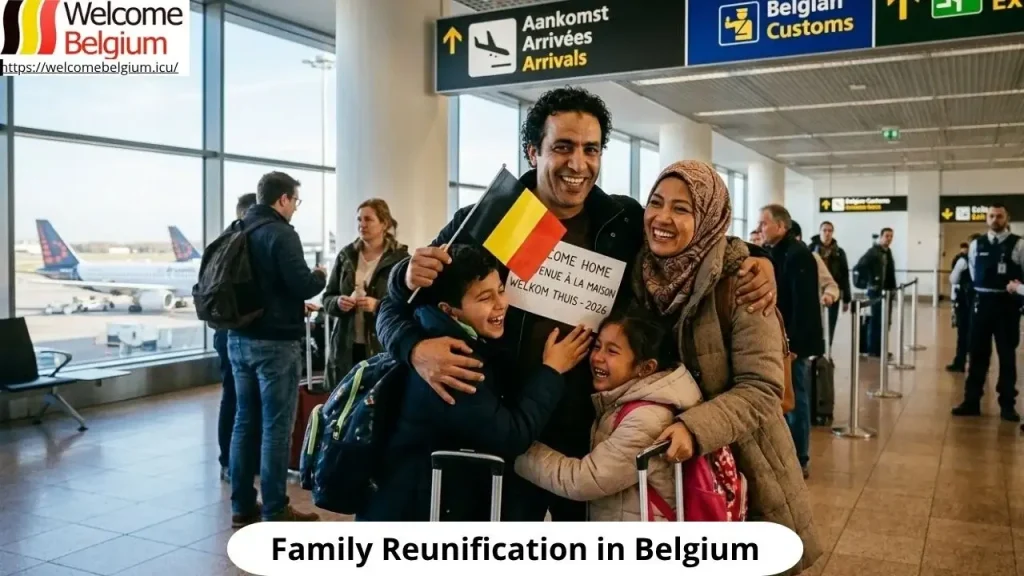
Greetings. This is Alex, and today we’re diving into one of the most emotionally complex and legally intricate topics: family reunification in Belgium.
In 2026, the rules of the game have shifted significantly. While migration policy has become more transparent thanks to digitalization, requirements for candidates have tightened. If your goal is to obtain a residence permit (VNR/RP) for a partner or children, “just gathering papers” is no longer enough. Every case now undergoes a deep automated audit, where the slightest discrepancy in the sponsor’s income or housing square footage can lead to a rejection.
In this guide, I will break down the entire process: from the initial filing via the WIB platform to the neighborhood officer’s visit and receiving the coveted card. We will discuss in detail how to properly arrange family immigration to Belgium to avoid months of delays and “stuck” dossiers.
Who is Eligible for Reunification? (Beneficiary Categories)
First, the essentials. In 2026, the rules depend not only on your relationship to the person but also on your personal status in Belgium (whether you are an EU citizen or not).
Summary Table of Categories (Updated 19.04.2026)
| Category | Age Limit | Main Condition | Type of Connection |
| Spouse | 21+ years* | Official marriage | Recognized in Belgium |
| Partner (Cohabitant) | 21+ years* | Stable relationship | Wettelijke samenwonen |
| Minor Children | Under 18** | Dependent | Biological / Adopted |
| Disabled Children | No limit | Inability to self-support | FOD/SPF Certificate |
| Parents | For minors only | Child has refugee status | Humanitarian aspect |
*The age limit is reduced to 18 if the couple lived together for at least 1 year prior to filing.
**For family members of EU citizens (non-Belgians), the age limit for children is up to 21 years.
Read also: What changed in Belgium’s migration law in 2026 — a detailed breakdown of the global reform affecting all types of residence permits.
Spouses and Official Partners: Marriage vs. Wettelijke samenwonen
In 2026, Belgium has fully equalized the rights of traditional marriage and legal cohabitation (wettelijke samenwonen / cohabitation légale). However, for the IBZ (Immigration Office), there is a difference, and it lies in the evidence.
- An apostilled and translated certificate is sufficient. If the marriage was contracted outside the EU, be prepared for a “sham marriage” (schijnhuwelijk) check.
- Legal Cohabitation. This is the ideal option for couples (including same-sex couples) whose union is not officially registered. To confirm a stable and lasting relationship in 2026, you must prove one of three facts:
- You have lived together legally for at least 1 year (in Belgium or abroad).
- You have known each other for over 2 years and have met at least 3 times (totaling 45 days or more).
- You have a common child.
Advice from Alex:
If you are applying via partnership, save everything: boarding passes from flights to see each other, joint photos, joint bank account statements, and even chat history. In 2026, the digital tracks of your relationship are just as much a document as a certificate from the commune.
Children: Age Traps and Special Cases
The question of age is where most people make mistakes. In 2026, two parallel realities exist:
- Sponsor is a Belgian citizen or a Non-EU citizen (Single Permit / Card A): Only minor children under 18 can reunite.
- Sponsor is an EU citizen (e.g., a Pole or Frenchman working in Belgium): The right to family reunification extends to children up to 21 years old.
If a child has already turned 18, you cannot bring them “just because.” The only legal exception is a proven disability. You will need a medical report confirming that the child cannot support themselves independently due to their health status.
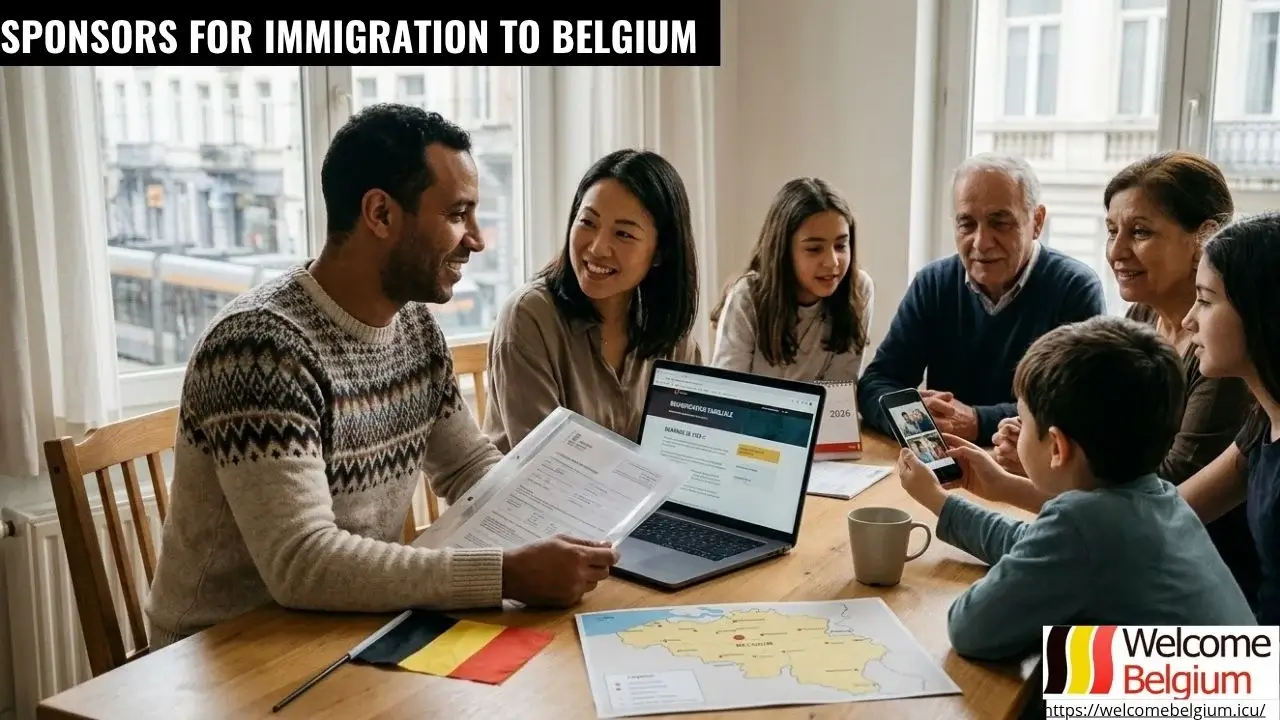
In all other cases (studies, lack of work in the country of origin), you will have to apply for a separate student or humanitarian visa.
Parents: Mission (Almost) Impossible
Remember: in 2026, there is no standard procedure for “reunification with elderly parents” for residents of Belgium. By law, it is assumed that you can help your parents financially by sending money to their country of residence.
You can only bring a father or mother in two cases:
- If you are a minor child recognized as a refugee (unaccompanied minor).
- Through Article 9-bis (humanitarian regularization), if you prove that the parent is absolutely alone and requires palliative care that is impossible to receive in their homeland. But I’m warning you: the approval rate for this category in 2026 is critically low.
It is important to understand that in 2026, the Immigration Office (IBZ) views reunification with parents not as your right, but as an exceptional grace from the state. Migration officers follow a strict logic: your possession of a residence permit or Belgian citizenship does not impose an obligation on the country to provide social security for elderly relatives.
Any attempt to apply via Article 9-bis without “ironclad” evidence that the parent cannot physically survive without personal care will lead to a swift rejection. Furthermore, an unfounded application can negatively impact your own “transparency” in the system, so I recommend using this path only in situations where no other option truly exists.
Financial Requirements: Income Threshold in 2026 (Hard Skill)
In 2026, Belgium officially shifted to a new indexing system. While the amount used to be static, it is now tied to 120% of the Social Assistance Threshold (RIS).
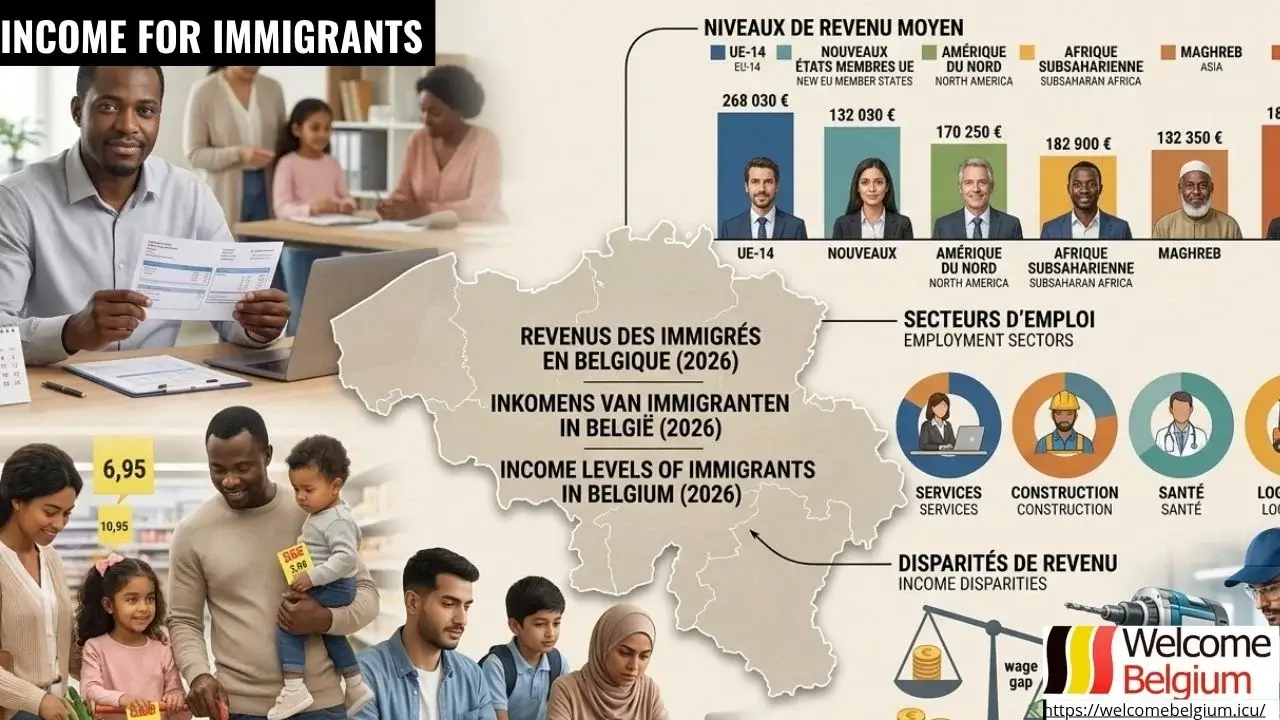
According to official data from the Immigration Office (IBZ) and current social protection indices, the minimum income threshold for family reunification in 2026 is set at €2,408.79 net. According to SPF Finances, this figure is linked to 120% of the base RIS rate and is subject to automatic adjustment with every spike in inflation.
Important:
This amount is the base for reunification with one person (spouse or child). A new regulation took effect in 2026: +10% to this base for every additional family member.
What counts as income (“Clean Money”):
- Net salary as per contract.
- Regular bonuses and 13th-month salary (calculated proportionally for the year).
- Business income (for the self-employed, based on the latest tax return).
What does NOT count (IBZ Blacklist):
- Unemployment benefits (Allocation de chômage).
- Social assistance (CPAS / RIS).
- Family allowances (Kinderbijslag / Allocations familiales).
- Short-term compensations and “under-the-table” payments.
The Main Change of 2026: Total Digitalization
Migration officers no longer need to rely on bank printouts.
- Direct Access. Through the MyMinfin system, the IBZ instantly verifies declared income against actual tax contributions. This minimizes the chance of success when trying to provide inaccurate information.
- Cross-Checking. If you state an income of €2,500 but the tax database shows an average of €2,100 over the last 3 months, 2026 practice dictates that the dossier will likely be moved from automatic mode to in-depth manual review, delaying the process indefinitely.
- Auto-Inquiry. In 2026, the IBZ may contact employers directly if there are sharp spikes in income right before the application.
Belgium has become stricter in 2026, but it has left “loopholes” for those who can prove stability rather than just “raw numbers.” If your income is below €2,408.79 but above the average Belgian salary for your industry, you have a chance.
Legal ways to prove financial stability:
- Summing Incomes. Following a court ruling in early 2026, the IBZ is now obliged to consider the partner’s income if they are already legally working in Belgium. This is a lifesaver for many couples.
- Liquid Assets. Owning real estate in Belgium or having significant savings (from €30,000) may be accepted as a mitigating factor, but only in addition to a stable job.
- Professional Prospects. If you are due for a promotion or your contract guarantees a raise within 3 months, include a letter from your employer.
Summary Table of Income 2026
| Parameter | Condition | IBZ Verdict |
| Income > €2,408.79 | Stable contract | Green light 🟢 |
| Income €2,100 – €2,400 | Owns housing / Partner’s income | Manual review 🟡 |
| Income < €2,173.88 | Benefits only | High risk of rejection 🔴 |
Advice from Alex:
Use the “Safe Entry” financial strategy. The biggest mistake I see in 2026 is applying with an amount exactly at the €2,408.79 limit. Remember: once you apply, you are under a microscope. If your income drops by even €50 a month after filing (e.g., due to unpaid sick leave), the system may flag it.
Alex’s Experience (from 2026 practice): In 3 out of 5 cases this year, the IBZ requested additional MyMinfin statements for the last 12 months if the sponsor’s income was “borderline” (€2,410–€2,450).
Case Study: One of my freelance clients received a request to confirm contracts for the following year, despite a perfect tax return for the last one. We attached Letters of Intent from clients, and only then did the dossier move forward. Conclusion: if you are “on the edge” regarding money, prepare stability evidence in advance.
Housing and Insurance Requirements: 2026 Standards
The definition of “adequate housing” (logement suffisant) is based on the standards of Regional Housing Codes (Flanders, Wallonia, and Brussels). According to SPF Intérieur, compliance with health and safety standards is mandatory for a positive report, with inspectors relying on the updated 2026 technical regulations.
There is no single “golden number” of square meters per person in Belgium, as norms are dictated by regional codes. However, in 2026, the IBZ follows these standards:
- Number of Rooms. A couple must have at least one separate bedroom. For children, the rules are stricter: starting at a certain age (usually 6–10 years), children of different genders cannot sleep in the same room.
- Sanitary Norms. Housing must meet regional safety and hygiene standards. This means heating, running water, proper ventilation, and no mold.
- Lease Registration. The rental contract must be registered with the tax authorities (Enregistrement du bail). Without this, the housing “does not exist” for the migration service.
Important: In 2026, the migration officer may request a visit from a technical inspector from the commune if there are doubts about the space relative to the number of family members.
Regarding health insurance, there is a “trap” in 2026. Many sponsors think: “I’m already in a mutualité, I’ll just add my wife/kids.”
A Belgian insurance fund (e.g., MC, Partena, or Solidaris) cannot “activate” relatives until they have a national number (NISS), which isn’t issued until registration at the commune.
Real Case (Anonymous):
A couple applied in Brussels with a 45 m² one-bedroom apartment. It seemed fine, but the neighborhood officer noted that “the living room area does not allow for a full relaxation space.” Result: a request for a technical housing audit, which delayed the process by 3 months.
Advice from Alex:
If your home is smaller than 50 m², be prepared for the inspector to measure rooms with a tape measure. In 2026, “adequate housing” is a subjective factor.
To apply for a Visa D or reunification within the country, you need:
- Mutualité Certificate: A document confirming that relatives will be insured as soon as they receive their residence permit.
- Private Insurance (Incoming Insurance): For the “waiting period” (while the Orange Card is valid), you must take out private medical insurance. In 2026, the minimum coverage must be at least €30,000 and include repatriation.
Summary Table of “Base” Requirements
| Parameter | Requirement | Proof Document |
| Housing | Registered contract + État des lieux | Copy of contract with MyMinfin stamp |
| Space Norm | Min 1 bedroom for a couple + child norms | Composition de ménage (from commune) |
| Insurance | 100% medical risk coverage in Belgium | Incoming Insurance policy + Mutualité letter |
Advice from Alex:
In 2026, I strongly recommend checking the property via a regional classifier (e.g., Woningpas in Flanders) before signing a lease for reunification. If you rent a 30 m² studio, bringing a spouse and child is practically impossible.
When searching for housing, immediately ask the owner for confirmation that domiciliation for multiple people is allowed. Always aim for a flat with an “extra” room if you plan on having children—this is the best signal of stability for the IBZ.
Step-by-Step Application Algorithm: The 2026 Procedure
In 2026, the path to family reunification is divided into two distinct strategies. The choice depends on where the family is physically located at the time of application.
Option A: Application via Consulate (Visa D)
This is the classic route for those currently outside the EU.
- Booking an appointment is done through the official visa center or the Belgian Consulate in the country of residence.
- Visa D. The family applies for a National Type D Visa (long-stay).
- Processing takes between 3 to 9 months (depending on the complexity of the dossier).
- Once approved, the visa is placed in the passport. The family enters Belgium and must report to the commune within 8 days to apply for their A or F Card.
Option B: Application within Belgium (Change of Status)
This option is suitable if the family is already in Belgium legally (e.g., via visa-free entry or a Schengen visa).
- When it’s legal: If the partner/children have a valid right to stay (even a tourist one) at the moment of filing.
- Risk of deportation: If you file documents after your legal stay has already expired, it is considered a violation. In 2026, the Immigration Office (IBZ) may refuse to process the case domestically and require you to leave the country to apply for a Visa D. Do not wait until the last day of your Schengen visa!
- Annex 15: Immediately after filing at the commune, an Annex 15 is issued—a temporary document confirming the right to stay in the country until a decision is made (usually followed by the Orange Card).
Useful information: How long to wait for a family reunification decision in Belgium — up-to-date processing times considering the new digital WIB system.
Working with the “Working in Belgium” (WIB) Platform
In accordance with the SPF Sécurité Sociale directive, as of May 2026, the application procedure has transitioned to an exclusively digital format via the Working in Belgium (WIB) portal. According to federal government data, this step aims to accelerate data processing and enable instant synchronization with social security databases (RSZ/ONSS).
This procedure is regulated through the single state portal Working in Belgium (WIB), which now serves as the primary gateway between the applicant and the migration service, eliminating the need for physical copies in most cases.
How Not to Break the System (Tips from Alex):
- Formats and Size. The WIB robot in 2026 is picky. Upload files strictly in PDF format; a single file must not exceed 5 MB.
- Name your files in Latin characters according to their content: Marriage_Certificate_Legalized.pdf, Salary_Slip_March_2026.pdf. If the robot doesn’t recognize the document type, the file might get “lost” in the system.
- eID / Itsme. To enter the platform, the sponsor absolutely needs an active eID card or the Itsme Make sure your certificates are updated.
- Screenshot Confirmation. After uploading, always save a final screenshot showing the application number. In case of a technical glitch, this will be your only proof of timely submission.
When choosing between a Visa D and domestic filing, remember: Visa D is more reliable but means a longer separation. Domestic filing is more convenient but requires flawless compliance with deadlines and “clean” entry conditions.
Complete List of Documents and Validity Periods in 2026
Collecting documents is a race against time. In 2026, the Immigration Office (IBZ) has tightened control over the “freshness” of paperwork. If a criminal record certificate is expired by even one day at the time an officer opens your dossier, you risk an automatic rejection without the right to submit it later.
Unified Document Checklist for Family Reunification:
| Document Type | Validity in 2026 | Legalization / Translation | Key Nuances |
| Marriage / Cohabitation Certificate | Indefinite (but extract < 6 months) | Apostille + Sworn Translation | Must be recognized in Belgium. |
| Child’s Birth Certificate | Indefinite | Apostille + Sworn Translation | On the original document. |
| Criminal Record (18+) | 3 Months | Apostille + Sworn Translation | Must cover the last 5–10 years. |
| Medical Certificate | 6 Months | Official Embassy Form | From an accredited physician. |
| Passport Copies (all pages) | Until expiration | Not required | All pages, including blank ones. |
| Income Proof & MyMinfin | 1 Month | Not required | MyMinfin extracts and Salary Slips. |
| Lease Contract / Housing | For the duration of RP | MyMinfin Registration | With an official registration stamp. |
Formatting Nuances in 2026:
- The Deadline Trap. In 2026, it is critical to account for shipping time. A criminal record “lives” for only 90 days. If applying within Belgium, the term is counted from the issue date in the country of origin to the registration date at the commune.
- Sworn Translation (Traducteur Juré). Based on 2026 experience, I strongly recommend using Belgian sworn translators registered in the VTI (National Register). This avoids the need for an additional apostille on the translation itself.
- Digital Format. For the Working in Belgium (WIB) portal, all documents must be color-scanned in PDF. In 2026, the IBZ scanner-robot is set to recognize metadata, so use high-quality scans, not phone photos.
Advice from Alex:
Do not start your collection with the criminal record. This is the most common mistake. Follow my algorithm:
- Prepare “eternal” documents: apostille marriage and birth certificates (this can take a month).
- Find a sworn translator in Belgium and agree on deadlines.
- Only when everything else is ready, order the criminal record and complete the medical check.
Your goal is for the criminal record to be no more than 2–3 weeks old the moment you hit “Submit” in the WIB system.
Police Checks and “Sham Marriage” Interviews
After submission, the dossier enters “waiting mode,” and the commune signals the local police to conduct a woonstcontrole — a verification of actual residence.
In 2026, this stage has become more unpredictable. Neighborhood officers (wijkagent) increasingly arrive without warning at early or late hours to catch both partners at home. The officer doesn’t just check for names on the doorbell; they evaluate the reality of the union “in the field.”
Related article: Why people are waiting for an Orange Card longer than 6 months — an analysis of technical glitches and common causes for delays.
To secure a positive police report, the officer must see signs of a shared life:
- Names on the bell and mailbox. Clear, printed stickers with both last names (a 2026 base requirement).
- Personal belongings. Presence of clothing, shoes, and hygiene products for both partners in appropriate quantities.
- Domestic traces. Shared photos in frames, common groceries in the fridge, personal items in the living room.
- Neighbor testimony. Confirmation from residents that they regularly see you together.
If the visit leaves questions, the IBZ schedules a separate interview for a suspected sham marriage (schijnhuwelijk). This is an in-depth interrogation where officers cross-check your testimonies on everything from the color of your bedsheets to who took out the trash last Tuesday. In 2026, they focus heavily on “digital history” — without joint photos or chats from the last six months, proving a real relationship is extremely difficult.
Alex’s Tip:
In 2026, don’t just mimic a life; organize it according to Belgian norms. From the first day of registration, become “visible”: meet a few neighbors so they can confirm your residence. If the officer catches you off guard, don’t panic. Calmly show them the apartment and photos on your phone. Remember, the report is 50% based on the officer’s subjective impression of your sincerity.
Alex’s Practice (Why Interviews are Triggered):
Many think interviews are rare. In reality, in 2026, one in four cases with an age gap of over 10 years or a “quick wedding” (less than six months after meeting) is sent for an IBZ interrogation.
Case Study: “Orange Card Under Threat”
A couple in Antwerp had issues because, during the officer’s visit, there was only one toothbrush in the bathroom (the wife hadn’t moved everything yet). The officer flagged this as a sign of separate living. We had to provide joint bank statements and furniture receipts to prove the union’s reality. My experience: small details decide everything.
Integration: Mandatory Courses (Inburgering)
In 2026, the integration certificate has become as vital as your proof of income. The Immigration Office (IBZ) now directly links the renewal of your temporary residence permit (Card A) to your progress in the Inburgering program.
According to updated 2026 legislation, any foreign national arriving via family reunification signs an “integration contract.” If, by the time your card expires a year later, you cannot prove that you have started or are successfully attending the courses, the commune has the right to refuse your extension.
The state wants to see that you aren’t just “moving to join your spouse,” but are becoming an active member of society who understands local laws and is ready for the labor market.
What the 2026 program includes:
- Social Orientation Course: An intensive block in your native language (or a bridge language) about life in Belgium. You will learn everything from how the tax system works to the nuances of health insurance and local values.
- Language Courses (Levels A1/A2): In 2026, the minimum bar for the first renewal is a confirmed A1 level. However, for permanent residency or citizenship in the future, you will need A2 or higher. Schools are often overbooked, so you should register at Atlas (Antwerp) or Bon (Brussels) immediately after receiving your Orange Card.
Important:
In 2026, I recommend viewing Inburgering not as a chore, but as a legal way to fast-track your citizenship. Having an integration certificate in your dossier removes 90% of unnecessary questions from migration officers in the future.
FAQ: Urgent Questions from Readers
What if the sponsor loses their job during the waiting period?
This is a critical situation. The IBZ checks income not only on the day of filing but also before issuing the card. You must find a new job immediately or prove significant benefits, otherwise — rejection.
Can I bring pets via reunification?
Legally, a cat is not a family member; it is 'property.' You need an EU pet passport, a microchip, and a rabies vaccination administered at least 30 days before entry.
Is there a fee for the application?
Yes, in 2026, the administrative fee (redevance) is approximately €198 per adult (indexed). Your case won’t even be opened without payment.
Can I leave Belgium while waiting for my Orange Card?
Only if your Schengen visa or visa-free period is still valid. Once they expire, you are 'locked' in Belgium until you receive a return visa or the card itself.
Does reunification grant the right to work?
In 2026, yes, almost immediately. Look for the remark 'Marché du travail: Illimité' on your temporary document.
Can we reunite if we live in a studio?
Almost impossible. For a couple with a child, at least 2 rooms are required (bedroom + living room). Studios are a frequent cause of rejection due to 'inadequate housing'.
What if we separate a year after getting the residency?
For the first 5 years, your permit (Card A or F) is tied to your partner. If the relationship ends without serious justification (e.g., domestic violence), the card can be revoked.
How long to wait for the card after approval?
Usually 2–3 weeks for the plastic card to be produced at the commune after the IBZ sends the official 'OK'.
Does a child need insurance for school?
Yes, schools require accident insurance, but for residency purposes, you still need full health insurance (mutualité).
Can I bring my mother if she is all alone?
As mentioned earlier, this is extremely difficult. It is only possible via Article 9-bis (humanitarian) if you prove she cannot physically survive without you.
Let’s be honest: family immigration to Belgium in 2026 is not a stroll through the Grand Place; it is a complex project requiring the precision of an engineer. The state is digital—it sees your taxes in MyMinfin, checks your social media footprints, and looks into your closet through the eyes of the neighborhood officer.
But don’t be afraid. If you have a real relationship, a stable income above €2,408.79, and a sincere desire to join Belgian society, you will succeed. In 2026, honesty and proper documentation save years of your life.
Pack your papers, learn the language, and remember: Belgium is a great country to live in if you play by its rules. See you at the commune when you pick up your F Card!
Yours, Alex, Immigration Expert.
Disclaimer (April 2026)
This article is for informational purposes only and reflects the situation as of April 2026. Belgian migration law and Immigration Office (IBZ) requirements may change based on regional decrees and political agendas.
- Not Legal Advice: The author shares personal experience and analysis of open sources. For specific legal issues, we strongly recommend contacting licensed lawyers or official representatives of the SPF Intérieur.
- Dynamic Data: Minimum income amounts (RIS index) and document validity periods are subject to regular indexing. Always verify figures on the MyMinfin and Working in Belgium