
Last Updated on April 20, 2026 by Alex
BRUSSELS — As part of a large-scale program to modernize the state apparatus, the Belgian government is officially completing the transition to digital document management. From May 1, 2026, the use of the state portal Working in Belgium will become the only legal way to apply for key types of work permits.
This decision closes the last administrative loopholes that allowed employers to interact with migration services via email.
Legislative framework and legal grounds
The reform is based on strict compliance with federal legislation, which is systematically adapted to EU standards for the digitalization of public services:
- Law of April 30, 1999. The basic document regulating the employment of foreign workers. The latest amendments of 2024-2026 establish the priority of electronic data submission systems. Official source (Moniteur Belge)
- Royal Decree of May 16, 2003. Defines the specific procedure for issuing permits. New instructions from the Ministry of Labour supplement this decree with a mandatory authentication requirement through the eIDAS system or local Itsme services. Official source (Moniteur Belge)
Recent amendments to the national legislation establish a clear priority for electronic data submission systems, making digital integration a key requirement for all labor market participants.
If you are just beginning the application process, we recommend reviewing our comprehensive guide to the Single Permit: what it is and which professions qualify. This resource provides essential information on the updated criteria and will help ensure that your application meets the new technical standards established by the Belgian authorities.
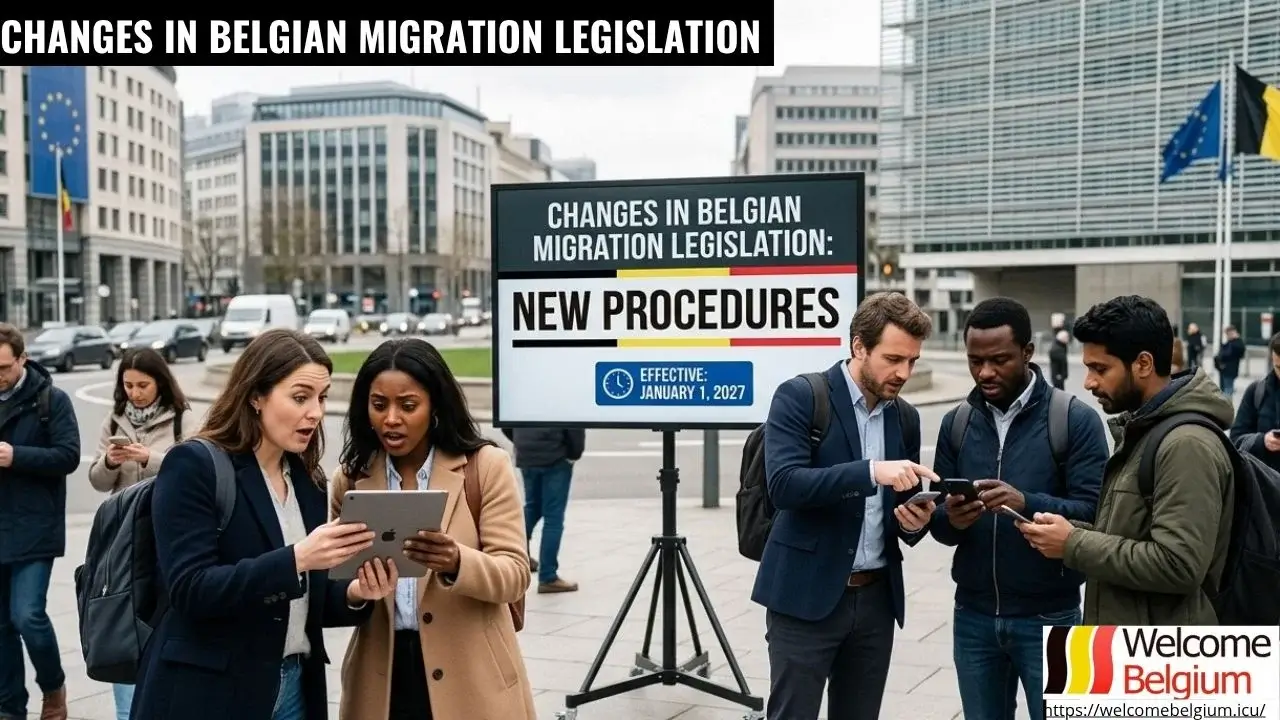
From May 1, the changes will affect short-term visits and employees living in border states.
| Permit Type | Category of workers | Filing mode from May 1, 2026 |
| Short-work permit | Short-term (up to 90 days): artists, experts, auditors | Exclusively via the online portal |
| Commuter permit | Cross-border workers (living in neighboring EU countries) | Exclusively via the online portal |
| Single Permit | Long-term work (over 90 days) | Portal (already in effect) |
Technical Sovereignty and Control
The Belgian Ministry of Employment and Social Economy emphasizes that moving away from email (PDF attachments) is driven by the need for deeper integration with the Federal Public Service (FPS) Employment.
The centralized system enables:
- Automatic verification of data against the Social Security Service (RSZ/ONSS)
- Synchronization with the EES (Entry/Exit System), which now monitors biometric entry and exit at Belgium’s borders.
- Fraud prevention, as the portal requires direct identification of the company representative via Itsme or eID.
“The transition to an exclusively digital format via the Working in Belgium portal is not just a change of interface, but a profound structural reform,” notes Alex, a lead analyst for our site. “For compliant employers, this means transparency and faster processing. However, automated systems are extremely sensitive to minor errors in documents that could previously be resolved through personal correspondence. Digital literacy is now as critical as legal compliance.”
Recommendations for Business
Any applications submitted via the old methods after midnight on April 30, 2026, will be voided. To ensure uninterrupted operations, companies must:
- Verify access to the system in advance through the official Legislative Registry (e-Justice) to confirm the authority of signatories.
- Consult the current lists of bottleneck professions on the websites of regional authorities (e.g., Flanders (Vlaanderen.be) or Wallonia (Wallonie.be)).
- Contact the Immigration Office (IBZ) for any questions regarding residence status via their official portal.
Summary: Belgium is moving to a “Digital by Default” model. For employers, this translates to shorter processing times but requires impeccable technical preparation.