Last Updated on April 11, 2026 by Alex
If your salary in 2026 falls below the new threshold by even a few euros, you risk losing your residence permit. Every year, Belgian authorities revise the minimum compensation levels for foreign specialists. These figures are indexed to the consumer price index and directly influence whether you or your employees will be granted the right to stay and work in the country.
As a Welcome Belgium expert, I have prepared a detailed breakdown of the current limits that came into force and will be valid throughout 2026.
Key Categories and Figures in 2026
In Belgium, salary requirements depend not only on the type of permit but also on the region (Flanders, Wallonia, or Brussels-Capital), although there has been a trend toward unification in recent years.
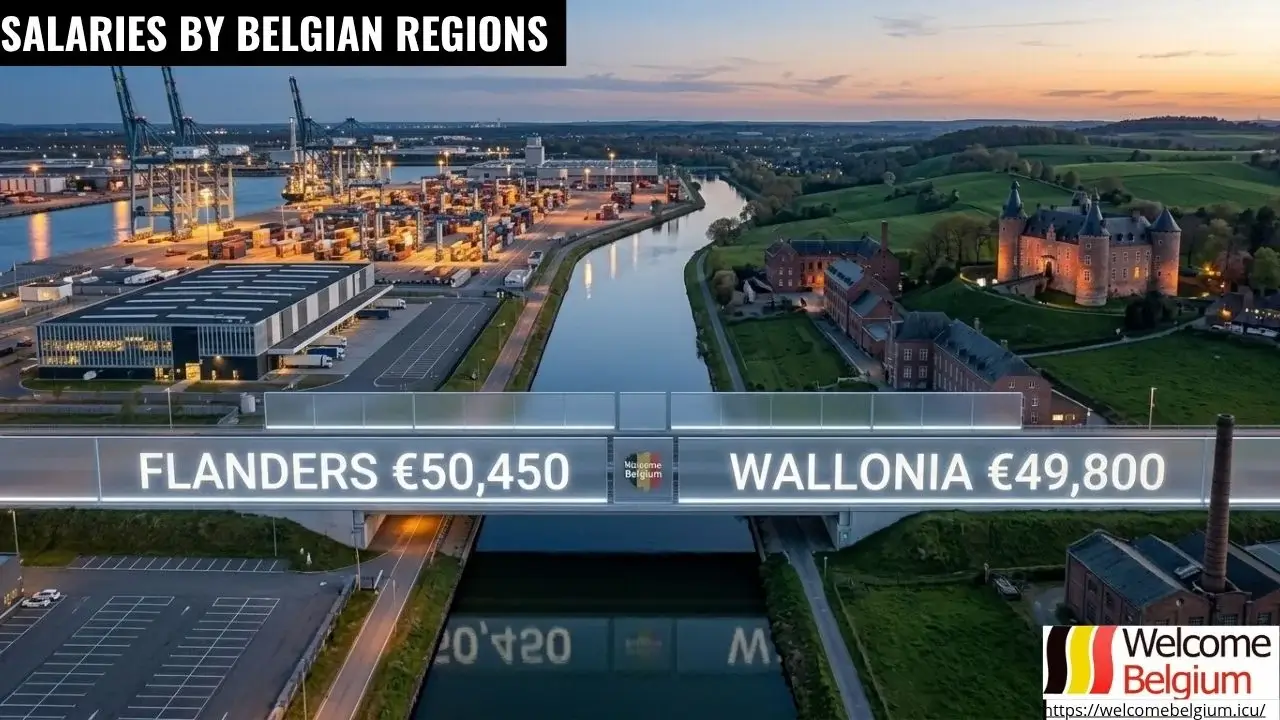
Table: Minimum Gross Annual Salaries in 2026
| Specialist Category | Flanders | Brussels | Wallonia |
| Highly Qualified Personnel | €50,450 | €50,450 | €49,800 |
| Management Positions | €84,100 | €84,100 | €83,500 |
| European Blue Card (Blue Card) | €62,300 | €62,300 | €62,300 |
| Young Professionals (Under 30) | €39,900 | €40,200 | €39,900 |
Important:
These amounts include the base salary and fixed bonuses, but they do not include cost-of-living allowances or one-time discretionary bonuses that are not explicitly stated in the contract as part of the regular fixed remuneration.
What Changed in 2026?
This year, the indexation averaged 3.4%. This means that if a contract was “on the edge” of the minimum threshold last year, the employer must revise the salary amount upon renewal of the Work Permit. Failure to do so will result in an automatic rejection by the immigration authorities.
Critical Nuances:
- Blue Card: The threshold for the Blue Card remains the highest, but it offers more freedom for intra-EU mobility after 18 months.
- Shortage Occupations: For certain roles (e.g., specialized nurses or structural engineers), there are reduced thresholds that can be 10-15% lower than the standard requirements.
- Startups: In 2026, the support program for innovative companies has been expanded, allowing them to attract experts with a slightly lower income level during the first year of operation.
It is vital to understand: indexation is not just a formality; it is a legal trap. In 2026, Belgian immigration services have transitioned to automated data cross-referencing with the national tax database.
According to official directives from regional departments — Flanders Innovation & Entrepreneurship and Brussels Economy and Employment — any discrepancy in payments can be critical. If, at the time of your Work Permit renewal, it is discovered that the actual payments for the previous year fell short of the threshold by as little as €10 due to a lack of indexation, it may be treated as a violation of your residency conditions. Detailed rules are also updated on the federal portal IBZ Single Permit.

For the employer, this carries the risk of heavy fines. For the specialist, it may lead to the revocation of their legal status. Therefore, it is critical not only to sign a contract with the correct figure but also to ensure that the “Annual Gross Salary” on your payslips reflects the new limits, accounting for the mandatory annual indexation.
Salary Indexation 2026: What Has Changed?
Belgium remains one of the few countries in the world with a system of automatic wage indexation linked to the consumer price index. In 2026, this mechanism underwent several refinements that are crucial for both employees and employers to understand.
Unlike the minimum thresholds for a Work Permit, which are set by the government once a year, general salary indexation in the private sector depends on Joint Committees (Joint Committees / Paritair Comité).
- Average Rate: For the majority of office employees (CP 200), the indexation in January 2026 was approximately 2% – 3.5%.
- Industrial Sector: In manufacturing and manual labor sectors, recalculations occur more frequently (quarterly or semi-annually), which helped smooth out inflation spikes at the beginning of the year.
If your salary was fixed in your contract exactly at last year’s minimum threshold, “automatic” indexation is your lifesaver. However, keep two things in mind:
- Threshold Outpacing: Official government thresholds for new work permits often rise slightly faster than market indexation.
- Renewal Checks: When applying for a status extension, the immigration office does not check the original contract amount; they verify the amount you actually received in recent months. This must not be lower than the current 2026 threshold.
Alex’s Tip:
Be sure to check your “loonbrief” (payslip) for the last two months. If the “Gross Salary” amount hasn’t changed compared to last year, it’s time for an urgent conversation with HR. In 2026, any delay in salary adjustment can lead to administrative complications when renewing your ID card.
Expert Recommendations
If you are currently in the process of submitting documents, ensure that your employment contract clearly states the amount on an annual basis. Remember that in Belgium, it is standard to be paid “13.92 salaries” (including holiday pay and a Christmas bonus). Immigration authorities look specifically at the total annual sum.
For those planning to work for themselves, the rules are different. To learn about legalizing through your own company, read our comprehensive guide: Belgium Residence Permit for Freelancers and Businesses 2026.
If you have questions regarding tax calculations on these amounts or if you have received a rejection due to salary discrepancy — leave a comment or use the contact form on our website. We will help you navigate the details of Belgian legislation.
Best regards, Alex. Immigration and Law Expert at Welcome Belgium.
#Belgium #WorkInBelgium #WorkPermit #BlueCard #Immigration2026 #EuropeSalary #WelcomeBelgium