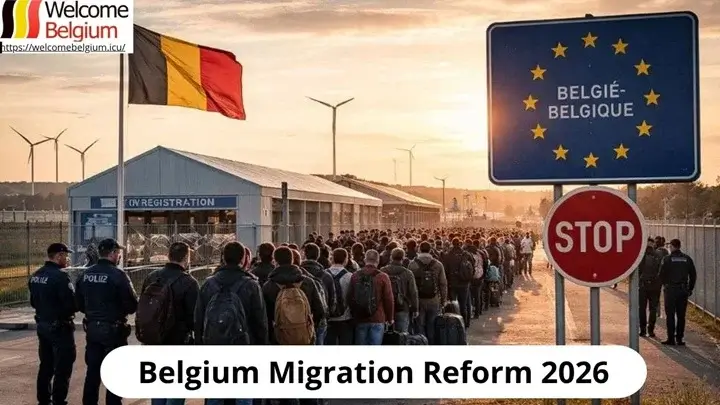
Hi there! Alex from WelcomeBelgium is back. If you thought the bureaucracy in 2025 was a headache, 2026 has prepared a real survival quest for us. Belgium has officially pivoted toward a policy of “selective openness”: the doors are wide open for high-tier talent, but for everyone else, the screws are being tightened to the limit.
I’ve analyzed the latest reports from the Office des Étrangers, Constitutional Court rulings, and the new regional decrees from Flanders and Wallonia. Grab a coffee and settle in—here’s your complete guide on how to stay “in the system” this year.
What has changed conceptually?
2026 marks a turning point for the Kingdom’s migration policy. Authorities have finally split arrivals into two clear categories: “economically beneficial” and “socially burdensome.” While rules used to be more universal, every case is now viewed under a microscope.
Key Vectors of Change:
- Economic Migration: Flanders has introduced a “selective approach.” Low-skilled labor is now almost entirely excluded from immigration programs.
- The Price of Citizenship: Administrative fees have skyrocketed nearly sevenfold, emphasizing that citizenship is a privilege, not a right.
- Security: Rigorous digital footprint checks and even lifetime entry bans have been introduced.
- Judicial “Tug-of-War”: The Constitutional Court has stepped in to protect families, freezing some of the government’s harshest initiatives.
This new landscape requires migrants to have more than just funds—it demands a deep understanding of regional laws, as Brussels, Flanders, and Wallonia are now competing for talent by setting different “entry thresholds.”
Labor Market: The 2026 Single Permit Reform
The most significant shift happened in Flanders. The region decided it no longer needs “generalist” workers. The focus is now exclusively on innovation and high-tech manufacturing. This has significantly complicated life for employers accustomed to hiring non-EU staff.
New Rules (Effective January 1, 2026):
- Goodbye, Low-Skilled Labor: The Single Permit program is now only available for positions requiring at least a Bachelor’s degree or high-level professional certification.
- Shortage List Cleanup: 14 positions were purged from the medium-skilled shortage list. Bakers, butchers, and drivers now have virtually zero chance of securing a work visa.
- Regional Fee: Flanders has introduced a processing fee of €250, payable before the documents even reach an official’s desk.
2026 Salary Thresholds (Table)
To ensure your Single Permit application doesn’t end up in the bin, your gross annual salary must meet these new 2026 thresholds:
| Employee Category | Brussels (Monthly) | Wallonia (Annual) | Flanders (Annual) |
| Highly Skilled | €3,703.44 | €53,220.00 | €48,912.00 |
| Management Staff | €6,647.20 | €88,790.00 | €83,150.40 |
| EU Blue Card | €4,748.00 | €68,815.00 | €63,586.00 |
It is crucial to understand that these amounts are indexed annually. If your salary doesn’t rise in line with inflation by the time you renew in 2027, your permit could be revoked automatically.
Citizenship and PR: The Price of Admission has Risen
Becoming a “New Belgian” has become much harder and more expensive. The government is being blunt: a passport is the finale of successful integration, not a tool to start it. The financial bar is now the main filter.
- Administrative Fee: As of January 2026, the application fee jumped from €150 to €1,030. Payment is made online and is non-refundable, even if you are rejected.
- Language Barrier: Requirements have been raised to the B1 level. This means you must do more than just understand basic phrases—you need to discuss complex topics fluently.
- Integration Test: This is no longer a formal interview but a comprehensive exam on Belgian history, laws, and values.
Interestingly, the sudden price hike caused a “gold rush” in Brussels. Those who managed to apply just before the reform are now facing 8–10 month wait times due to massive backlogs in local communes.
Family Reunification: Battle in the Courts
There is some good news here. In February 2026, the Belgian Constitutional Court suspended the government’s harshest amendments. The authorities tried to impose a two-year waiting period for many categories, but the court ruled this a violation of human rights.
What this means for families right now:
- Partner’s Income: The court now allows the income of both spouses to be counted when assessing financial stability.
- No Waiting Periods: Beneficiaries of subsidiary protection can once again apply for reunification immediately after receiving their status.
- Children: Procedures for minors remain a priority, despite the general trend toward tightening rules.
However, don’t get too comfortable. These provisions are “frozen” pending a final decision by the EU Court of Justice. This means a “window of opportunity” is open right now, but it could close at any moment.
Pro Tip from Alex:
“If you are planning to move or apply for status in 2026, don’t wait for the ‘perfect moment.’ With the courts currently blocking some of the government’s stricter moves, now is actually the best time to act before the legal window potentially shuts.”
Security and Surveillance: New Methods of Oversight
In 2026, Belgium has become far more meticulous regarding security. While physical border checkpoints haven’t made a full comeback, “smart control” is now omnipresent.
What to expect in practice:
- Random Spot Checks: Police and immigration services are conducting raids on international trains and cross-border buses to identify undocumented individuals.
- Digital Audits: Authorities have begun cross-referencing tax and migration databases. If you are living beyond your means (spending significantly more than your contract salary), it can trigger an investigation and lead to the revocation of your ID card.
- Lifetime Entry Bans: For extremist rhetoric or actions, it is now possible to receive a permanent entry ban with no right to appeal for the first 10 years.
These measures target not only terrorism but also the elimination of “social tourism”—cases where individuals claim benefits while effectively residing in another country.
Pitfalls and “Silent” Changes
Beyond the headline-grabbing numbers, technical filters have emerged that catch 30% of applicants off guard.
- Validity of Certificates: Criminal record checks (Police clearance) now have a strict 6-month lifespan. If you ordered yours at the very beginning of your document collection, it might be expired by the time you submit.
- The 9-Week Rule: For mid-level vacancies, employers must prove they have conducted a labor market test (searching for candidates among Belgians/EU citizens) for at least 9 weeks via portals like VDAB or Le Forem.
- Medical Certificates: As of 2026, only certificates from doctors accredited by the Belgian Embassy/Consulate are accepted. A visit to a regular GP is a waste of time.
Attention to these details is what separates a successful move from deportation at the border. Belgian bureaucracy does not forgive errors in dates or signatures.
🎯 The 2026 Belgium “Survivor” Checklist
To avoid falling victim to the reforms, run through this list before any visit to the consulate or the city hall (Commune):
- Salary: Does your contract meet the new regional thresholds? (See the table in Section 1).
- Language: Do you have a B1 level certificate or proof of enrollment in a recognized course?
- Fees: Have you paid both the federal fee (Contribution) and the new Flanders regional fee?
- Banking: Are your bank statements transparent and consistent with your taxed income?
If even one point is in doubt, it’s better to delay your submission by a week and fix the paperwork than to receive a rejection and a black mark in the SIS database.
Official Resources for Verification
Bro, never trust chatroom rumors. Check only with primary sources that update in real-time:
- Office des Étrangers (IBZ) – The main authority for foreign nationals.
- Working in Belgium – The portal for Single Permit applications.
- EMN Belgium – European Migration Network with in-depth legal analysis.
Final Words of Advice from Alex:
“Belgium 2026 is a country for those ready to play the long game. The rules have become stricter, but the protection for those who follow them has also increased. Don’t try to ‘game the system’ with certificates and don’t cut corners on certified translations—the system catches errors instantly this year.
Remember: an immigration officer is not your enemy; they are just following an instruction manual. Give them a perfect folder of documents, and they’ll hand over your ID card with a smile. Good luck with your move—may your coffee in Brussels be strong and your visa approved!”