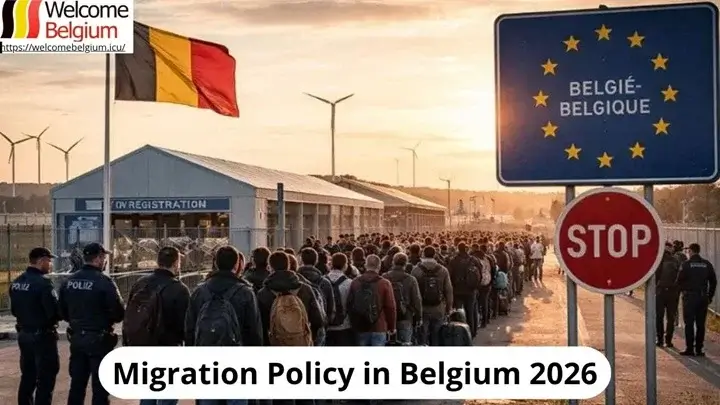
Belgium has started implementing stricter rules for foreigners in 2026—from work permits to citizenship. These new requirements are affecting migrants across the country and are part of the EU’s broader migration strategy.
According to Reuters and Euronews, EU countries have accelerated migration reforms in recent months. Belgium is among the nations feeling these changes most strongly.
The government is prioritizing tighter control: less spontaneous migration, higher requirements for applicants, and faster decision-making.
Work in Belgium: New Requirements
One of the main changes is an increase in the minimum salary for foreign workers, confirmed by The Brussels Times.
Current benchmarks:
| Worker Category | Minimum Salary |
| Highly skilled | ~€53,000 per year |
| Young professionals (<30 years) | ~€42,000 per year |
| Other workers | Access limited |
This makes it significantly harder to get unskilled jobs. Employers must prove they could not hire someone from the EU and are willing to pay the required salary.
Demand for skilled professionals remains strong—especially in IT, engineering, and healthcare.
Overall Trend: Stricter Policies
Belgium’s changes are part of a wider EU migration policy. As noted by the European Commission, the focus is on tighter control and faster processing of applications.
In recent months, EU countries have implemented measures including stricter asylum rules and accelerated deportations.
Key changes include:
- Faster deportation procedures
- Stricter asylum rules
- More rigorous document checks
- Restrictions on re-entry
- Discussion of migrant centers outside the EU
Euronews reports that these measures are already causing debates within the EU, though most countries continue the trend of tightening.
Social Policies Becoming Stricter
Belgium is also tightening social support for migrants. Authorities aim to reduce the system’s burden and limit cases where migrants move between EU countries seeking better benefits.

For example, assistance may be denied to those who have already been granted protection in another EU country. Checks on benefits and social housing are being strengthened.
Income, residence status, and actual living arrangements are reviewed. This makes the system more controlled but also more challenging for new migrants during the initial months.
Citizenship: Harder and More Expensive
In 2026, requirements for obtaining citizenship have increased. Now, it’s not enough to live in the country for a set number of years—you must also demonstrate integration.
Main changes:
- Application fees increased to ~€1000, reducing casual applications
- Language proficiency proof is required; no certificate means no application
- Stable income must be demonstrated—employment and taxes matter
- Integration is evaluated—participation in society and law-abiding behavior
Citizenship is no longer a formality; it is the result of active life in Belgium.
Pros and Cons of the New Policy
| Pros | Cons |
| More opportunities for skilled workers | Harder to migrate without a profession |
| Reduced strain on social system | Strict requirements |
| Clearer rules | Higher financial barriers |
| Better migration control | Increased bureaucracy |
Who Can Move to Belgium Now
Under current conditions, Belgium remains open, but not for everyone. The best chances are for those with in-demand skills and an existing job offer.
According to employment services:
VDAB
Actiris
The highest demand remains in IT, engineering, and healthcare.
Without qualifications, language skills, and a clear plan, migration is significantly more difficult. The new policy makes the selection process stricter but more transparent.
Conclusion: Belgium still welcomes migrants, but under stricter rules and clearly defined requirements.