Hi there, Alex here.
When I was moving to Belgium, my desk was buried under mountains of laws written in Dutch, and my head was a mess of confusing numbers. Fast forward to 2026: Belgium has sped up the approval process for pros, but the regional traps have become even craftier.
In this guide, I’m giving you pure practice. We’ll dive into how immigration to Belgium as a highly skilled worker actually works, why the Blue Card has become this year’s “cheat code” for freedom of movement, and how to get your degree recognized without losing your mind in the process.
Three Regions — Three Different Lives (and Three Different Budgets)
“Guys, Belgium is essentially three countries in one. And the immigration rules here depend entirely on where your boss is based.”
Many people assume that if they find a job in Belgium, the rules are the same across the board. Far from it! In 2026, decentralization has reached its peak. If you sign a contract with a company in Antwerp, you play by Flanders’ rules. If the office is in Liège, welcome to the legal framework of Wallonia. And Brussels? That’s an entirely different “planet” with its own monthly calculation system.
Facts 2026: Detailed Salary Thresholds (Latest Update)
This year, the regions have significantly revised the minimum salary for visa requirements. Here are the current figures that will determine whether you get your ID card or a rejection:
| Region | Highly Skilled Professionals | Young Professionals (Under 30) | Executive Positions |
| Flanders | €48,912 / year | €39,130 / year | €78,259 / year |
| Wallonia | €53,220 / year | €42,576 / year | €88,790 / year |
| Brussels | €3,703.44 / month | — | €6,647.20 / month |
What Does This Mean in Practice?
Flanders remains the most attractive region for young specialists. If you are under 30, the “entry ticket” here is significantly more affordable. Wallonia, however, made a sharp jump in 2026, setting the highest annual income threshold for professionals in the country.
The Brussels-Capital Region traditionally calculates income on a monthly basis. This is crucial: even if your annual income meets the standards, if in any specific month (for example, due to unpaid leave) you receive less than €3,703, the immigration office may raise questions.
Regional Quotas and Hidden Nuances
In 2026, Flanders introduced a fully digital portal that shortened application processing times. However, they also implemented stricter regional quotas for certain professions not included in the “shortage occupations” list.
Note from Alex:
Don’t forget about taxes! When you see €50,000 in your contract, remember that Belgium is a champion in taxation. You will take home approximately 55–60% of that amount. But that money is what buys you Belgian stability, healthcare, and the right to say “I’m home” after five years.
EU Blue Card vs. Single Permit: What Would I Choose Today?
“If I were moving now, I would aim exclusively for the Blue Card. In 2026, the rules have become simply fantastic compared to five years ago,” I admit honestly.
If you don’t meet the salary criteria for a Single Permit yet or are just starting your journey, consider the Au Pair program. It’s a great chance to legally live with a Belgian family, learn the language, and get a feel for the country. Check out this detailed guide on the Au Pair visa to see if this path is right for your start.
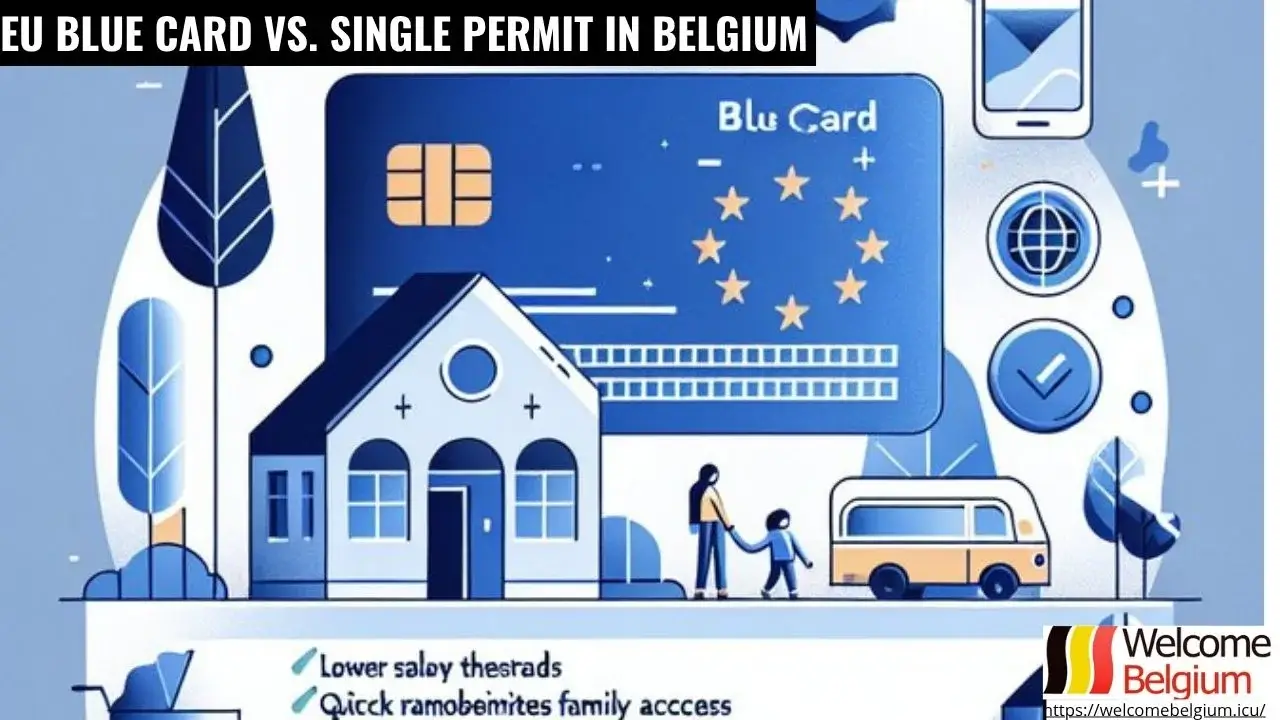
When you are first looking for a job, any visa feels like a win. But the devil is in the details. Most expats move via the Single Permit. It’s reliable, but you essentially become a “hostage” of a single employer. If you realize after six months that your boss is a tyrant, changing jobs becomes a massive quest involving a full re-application of all documents.
What’s New in 2026: Why the Blue Card is a “Freedom Cheat Code”
In 2026, the updated EU regulations took full effect, and Belgium has implemented them completely. Here is what has changed:
- Contract Duration: Previously, a minimum of one year was required. Now, a 6-month contract is sufficient. This opens doors for project-based work.
- Switching Bosses: After just 12 months of work, you can change employers without applying for a new permit (you just need to notify the authorities). You are no longer “tethered” to one company forever.
- Intra-EU Mobility: After one year in Belgium, you can move to work in another EU country through a simplified scheme.
Blue Card Salaries: How Much Do You Need to “Cost” in 2026?
To get this “golden ticket,” your offer must meet strict criteria. In 2026, the thresholds have been indexed again:
- Wallonia and Flanders: The bar is set at €68,815 per year. Yes, it’s a significant amount, but the perks match the price.
- Brussels: The capital has its own rules; the threshold is €4,748 per month (approximately €56,976 per year).
A Crucial Nuance from Alex:
There is a great loophole for young professionals and shortage occupations (like IT in Flanders). In some cases, the Blue Card threshold can be reduced to 80% of the standard—around €55,052. If you fit these criteria, make sure to ask your HR to apply specifically for the Blue Card.
If your salary allows it—always go for the EU Blue Card. It’s an investment in your mobility. If you are a “junior” or your offer is slightly lower, the Single Permit remains an excellent and proven option. Most importantly, remember: in 2026, Belgium values your experience even more than your degree (in the IT sector, you can now officially replace a degree with 5 years of relevant experience, even for the Blue Card).
The “Degree Recognition” Quest: How I Stayed Sane (NARIC & Equivalence)
“Remember my story about the massive folder of documents? Well, NARIC is the ‘Hard Mode’ boss. Here is how I applied in Flanders and why the French ‘Equivalence’ is a completely different story.”
Keep in mind that the rules of the game are constantly changing. The most up-to-date and detailed roadmap for this year is gathered in our article on Single Permit Belgium 2026. We cover everything from salary thresholds to commune registration. Save this link—it’s your ultimate handbook for the entire relocation process.
Many people think a simple translation of their diploma is enough. But for a highly skilled worker in 2026, official degree recognition in Belgium is a mandatory checkpoint—especially if you are aiming for lower salary thresholds or working in regulated sectors like Engineering or IT.
Flanders: My Experience with NARIC-Vlaanderen
If your employer is based in Flanders, you go through NARIC. As of 2026, they have moved entirely to an e-portal.
- Academic vs. Professional Recognition: Unless you are a doctor or a lawyer, apply for academic recognition (level of education). It is faster and usually sufficient for a work visa.
- Official Resource: NARIC-Vlaanderen Portal — Use their “wizard” tool to generate a personalized list of required documents.
Wallonia and Brussels: Equivalence
In the French-speaking part, the procedure is handled by the Wallonia-Brussels Federation. The main difference? They still have a slight preference for physical paperwork compared to the Flemish.
- Timeline: It can take up to 4 months. My advice? Apply the moment you sign your contract.
- Official Resource: Service des Équivalences (FW-B) — The portal for higher education recognition in the French-speaking community.
Technical Checklist 2026
- Apostille: This must be done in the country where the diploma was issued. Without an apostille, your documents are just pieces of paper to the Belgian authorities.
- Sworn Translation: You need translations into the regional language (Dutch for Flanders, French for Wallonia/Brussels).
- The E-Portal Process: In 2026, NARIC often requires a detailed summary of your thesis or core curriculum in English, Dutch, or French.
Official Links for Visa Application (Single Permit / Blue Card)
Avoid third-party agencies and use the official regional government portals:
- Flanders: Working in Flanders – Official Portal — Everything about the 2026 digital application process.
- Brussels: Brussels Economy and Employment — Rules for those heading to the capital.
- Wallonia: Emploi Wallonie — Official requirements for the Southern region.
- EU Blue Card: EU Blue Card Network – Belgium — Thresholds and eligibility.
Alex’s Pro Tip:
If you are an IT specialist without a degree but with 5+ years of experience, as of 2026, you can skip the NARIC quest for the Blue Card! However, if you do have a degree, get it recognized anyway. It is a powerful leverage during salary negotiations and essential for your future pension calculations.
Taxes: Where Does Half Your Salary Go and How to Get Some Back (Special Tax Regime)
“Everyone scares you with stories about Belgian taxes hitting 50%. Yes, it’s painful. But my friend Mark (also an expat) pays much less thanks to the new regime for inpats,” — I tell this story to anyone who turns pale at the sight of the Belgian tax grid.
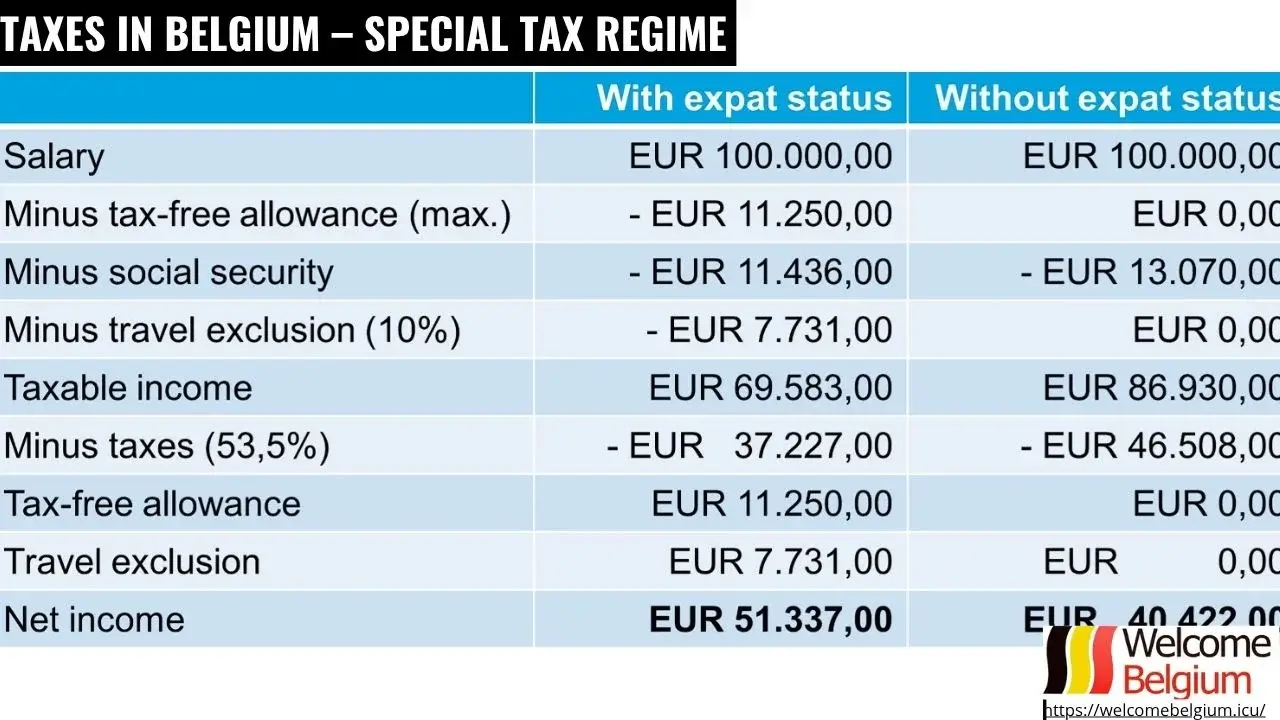
Belgium truly leads the EU in tax burden. It uses a progressive scale: the more you earn, the more you give back. If your income exceeds €48,320, everything above that is taxed at a 50% rate. But don’t despair just yet — in 2026, there are legal ways to “keep what is yours.”
April 2026 Update: Lowering the Threshold for the Special Regime
The big news this year: the Belgian government has lowered the entry threshold for the Special Tax Regime for Incoming Taxpayers.
- The New Threshold: To qualify for tax benefits, you now only need a gross annual income of €70,000.
- What’s the benefit? Your employer can pay you up to 30% of your salary (up to a maximum of €90,000 per year) as “reimbursement for costs in-curred as a result of the move and stay.”
- The Main Bonus: This 30% is completely tax-free. This is pure cash landing on your card.
How to Save on “Relocation Costs”
Even if you don’t qualify for the special regime, in 2026 Belgium expanded the list of tax deductions for foreigners:
- Childcare and Schools: A significant portion of expenses for childcare (up to 14 years old) is deductible from your taxable base.
- Energy Efficiency: If you rent a home and invest in “green” improvements, you can claim a tax credit.
- Home Office: The standard monthly allowance for remote work has increased in 2026 to approximately €160, which is tax-free.
Tax Returns for Foreigners
Remember: the tax year in Belgium coincides with the calendar year. In May or June of the following year, you will receive the “magic” envelope (or a notification in the MyMinfin portal). Do not ignore it! If you worked a partial year (e.g., arrived in July), you are likely entitled to a substantial tax refund, as your taxes were originally withheld based on a full year’s projected income.
Note from Alex:
If your offer is around €75,000+, make sure to discuss the Expat Tax Regime with HR before signing the contract. It can add an extra €500–800 to your net monthly salary. In Belgium, that’s enough to rent a very decent apartment in a city like Ghent.
Application Procedure: The “Single Permit”
“People used to wait for six months. In 2026, Belgium finally launched a Fast-track system. One of my followers got their approval in just 15 days in Flanders! However, in Brussels, you can still get ‘stuck’ for up to 90 days,” — Alex knows exactly how the gears turn.
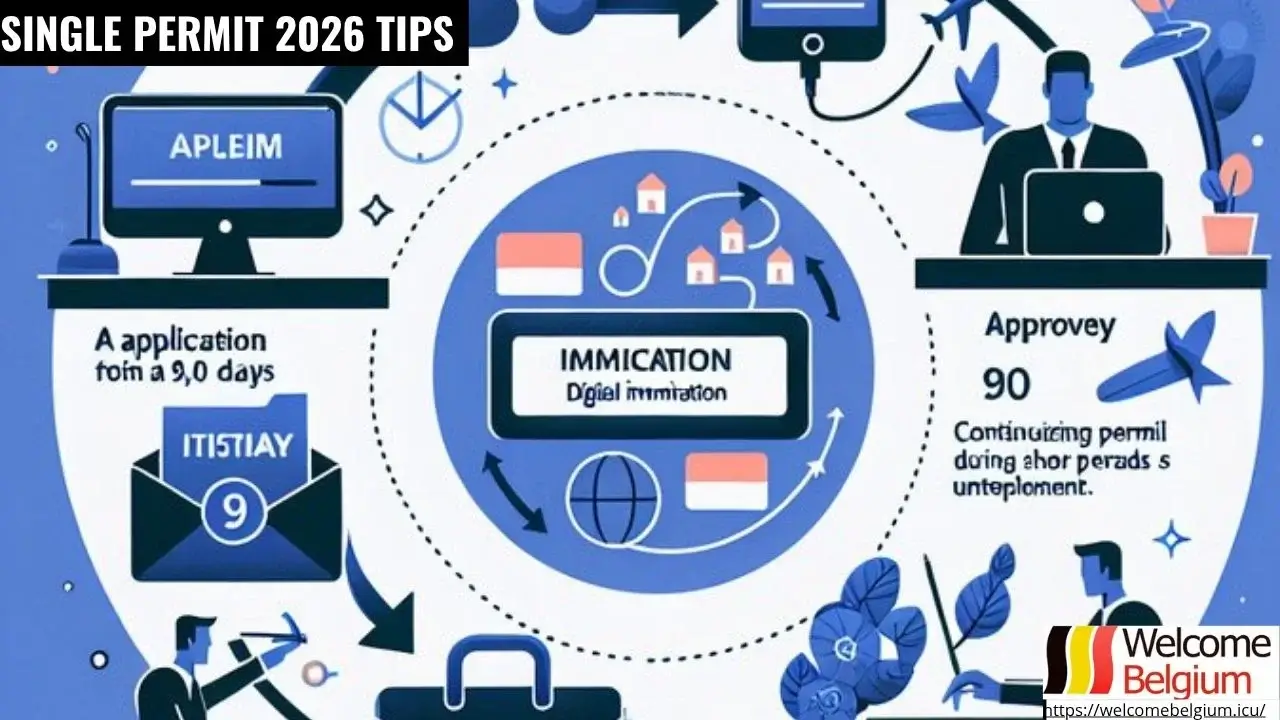
In 2026, the Single Permit procedure has become 99% digital. This means your employer handles the submission through an online portal, while you track the status.
Summary Table: Stages of Obtaining a Single Permit in 2026
| Stage | Responsibility | Process | Timeline (Average) |
| 1. Application | Employer | Uploading the contract and your documents to the regional portal. | 1–2 days |
| 2. Approval (Annex 46) | Region + Ministry | Salary and work right verification. Issuance of the decision. | Flanders: 15–30 days
|
| 3. Visa Type D | You (at Consulate) | National visa stamped in your passport based on Annex 46. | 3–10 working days |
| 4. Arrival & Commune | You | Residency registration and receiving your ID card (Annex 49). | 1–2 weeks |
Official Links for Status Tracking and Submission:
- Flanders (Fast-lane): Working in Flanders – Single Permit Portal — Details on the expedited procedure.
- Brussels: Brussels Economy and Employment – Workers — Official guide for those moving to the capital region.
- Wallonia: Wallonie Emploi – Permis Unique — The portal for the southern region.
- Federal Level (Home Affairs): IBZ – Office des Étrangers — General rules and regulations for Visa D.
2026 Document Checklist (What you need to prepare):
While the company handles the permit, gather this package for the consulate:
- International Passport: Valid for at least 15 months.
- Criminal Record Certificate: Recent (no older than 6 months), with an apostille and a sworn translation.
- Medical Certificate: From an accredited doctor (check the list on your local embassy’s website).
- Insurance: Coverage of at least €30,000 (a standard 90-day Schengen travel insurance works for the start).
Alex’s Pro Tip:
In 2026, Flanders introduced a regional processing fee of €200. Double-check with your employer that this has been paid, or they won’t even look at your file. As soon as you have the Annex 46 in your inbox, book your consulate appointment immediately—appointment slots in 2026 disappear fast!
Family Life: Schools, Daycare, and Careers for Spouses
“Belgium is a paradise for families. Spouses get the right to work automatically. Here is how we looked for a school in Antwerp and why you need to get in line for daycare even before you move,” — Alex knows that moving with a family requires double the planning.
The biggest bonus of the Belgian system in 2026 is the simplicity of Family Reunion. If you hold a Single Permit or an EU Blue Card, your spouse receives residency and an automatic right to work. Their ID card will be marked with “Labour Market: Unlimited,” allowing them to work for any company without additional permits, start a business as a freelancer, or access free language training through public employment services like VDAB in Flanders or Actiris in Brussels.
For those moving with children, education is the top priority. In Belgium, school starts as early as age 2.5 (kleuterschool); it is free and held to very high standards. For expat children, the system offers specialized OKAN classes, where they spend a year in intensive language immersion before transitioning to a regular classroom. According to Alex’s experience, within just six months in Antwerp, kids often start chatting in Dutch more confidently than their parents, fully adapting to their new environment.
2026 Family Relocation Checklist:
- Daycare Queue: Apply for a spot (crèche) immediately after signing your contract. In major cities, the waiting list can be 6–9 months.
- Commune Registration: Register at your local town hall on your very first day to secure a spot in the nearest school.
- Groeipakket Benefit: Apply for child benefits (approximately €170+ per month), which are available to all legally working expats.
- Language Courses: Sign up your spouse at an integration center (e.g., Atlas or Inburgering) for free training and job-seeking assistance.
The Belgian system is deeply rooted in multiculturalism and supporting new residents. You don’t have to prove your family’s value—the state is genuinely interested in ensuring your spouse and children integrate as quickly as possible.
Alex’s Pro Tip:
If your spouse plans to work in IT or Marketing, Belgium is the perfect place to start in 2026. The market is buzzing, and the number of companies ready to hire English-speaking expat partners has grown significantly. While one of you works, the other can comfortably improve their language skills through free courses, which might even include a small stipend as part of the integration program.
FAQ, Personal Life Hacks, and the Path to a Passport
“Belgium is a country of nuances. Personal hacks are often more important than official guides,” — Alex shares what he learned through his own experience.
Housing searches here begin and end with Immoweb. But remember: if you don’t answer a realtor’s call within 10 minutes of a listing going live, someone else is likely already viewing the apartment.
When it comes to money, your “Gold Visa” might turn out to be useless at the local bakery. In Belgium, Bancontact is king. Open an account at a local bank (like KBC, Belfius, or ING) immediately after receiving your Annex 49, or you’ll be constantly hunting for an ATM. And the most important piece of advice: respect the Work-Life Balance. Belgians do not like discussing work after 5:00 PM or on weekends. That time is reserved for family, beer, and cycling.
The Path to Citizenship: How 5 Years Turn into a Passport
“Five years fly by. The main thing is not to change your status to ‘non-working’ and to learn the language,” — Alex is already eyeing the finish line. To obtain Belgian Citizenship in 2026, you must follow the rule of “5 years of uninterrupted residence.” It is crucial that throughout these five years, you remain officially employed and pay your taxes.
The second pillar is economic and social integration. You will need to complete an integration course (Inburgering) and prove proficiency in one of the national languages at an A2 level. Alex chose Dutch, which opened doors not only to government offices but also to the hearts of his local neighbors. Once you receive your integration certificate and have worked at least 468 days over the last 5 years, the path to the “blue passport” is open.
FAQ: Answers to Reader Questions
- What happens if I’m laid off? In 2026, you have 90 days to find a new job and re-register your Single Permit without leaving the country.
- Moving from another EU country? Your EU Blue Card simplifies the process, but you still have to get a Belgian ID from scratch at your local commune.
- No diploma but plenty of experience? For highly skilled specialists (especially in IT), as of 2026, 3+ years of relevant experience can be equated to a degree when applying for a Blue Card.
- Can I change regions? Yes, but keep in mind that tax benefits and Single Permit regulations can differ slightly between Flanders, Wallonia, and Brussels.
- Do I need an apostille for everything? In 2026, yes—an apostille is mandatory for birth and marriage certificates if they were issued outside the EU.
Alex’s Pro Tip:
Don’t be afraid of the bureaucracy; it’s slow here, but predictable. Belgium is a marathon, not a sprint. The key is to assemble the right folder of documents and always keep a couple of bottles of local Trappist beer in the fridge to keep your spirits high.