Hi there! Alex here from WelcomeBelgium. If you’re looking for a legal, budget-friendly, and deeply immersive way to experience the heart of Europe in 2026, the Au Pair program is your golden ticket. But let’s clear the air right away: this isn’t just a “free vacation” or a simple babysitting gig. It’s a sophisticated legal framework where cultural exchange meets strict Belgian immigration policy.
In this guide, I’m breaking down everything you need to know—from navigating regional differences between Flanders and Wallonia to securing a contract that actually protects your rights. We’ll look at why the 2026 updates to “pocket money” and language school enrollment are now the make-or-break factors for your Visa D approval. If you’re ready to trade your current routine for Belgian waffles, language immersion, and a year of personal growth, grab a coffee—we’re diving into the details.
Who Can Become an Au Pair in Belgium? 2026 Requirements & Criteria
Many people mistakenly view the Au Pair program as a simple way to “live in Europe” while doing some casual babysitting. However, in Belgium, this is a strictly regulated form of cultural exchange, governed by regional authorities in Flanders, Wallonia, and Brussels. If you fail to meet even one of these criteria, the system will trigger an automatic rejection at the work authorization stage.
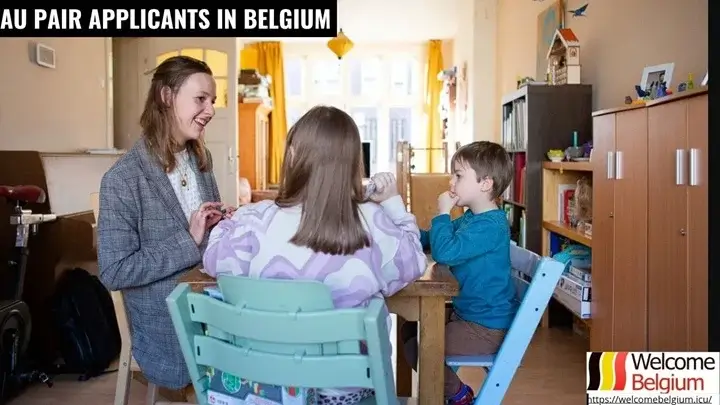
As an expert at WelcomeBelgium, I’ve prepared a detailed breakdown of the five “entry filters” you must pass in 2026.
1. The Age Window: 18 to 25 Years Old
Remember the golden rule: at the time of your Visa D application, you must be at least 18 and no older than 25 years old inclusive.
- For Non-EU Citizens: While EU citizens sometimes enjoy more flexibility, for “third-country nationals” (e.g., from the UK, USA, Ukraine, or Brazil), these limits are rigid.
- The 2026 Nuance: If you turn 26 while your visa is being processed, it is generally acceptable as long as the application was submitted before your birthday. However, applying in the “last minute” is a massive risk. Belgium wants young people focused on learning, not hidden labor migrants seeking permanent employment.
2. Family Status: No “Anchors” Allowed
This is a critical legal aspect that often catches applicants off guard. The Au Pair program in Belgium is closed to anyone who is married (civil or legal) or has children of their own.
- Why does this matter? The logic of the Immigration Office is simple: an Au Pair must be fully integrated into the host family. Having a spouse or children back home is seen as a “risk factor”—authorities fear you might seek ways to bring your family over or be distracted from the cultural exchange goals.
- Alex’s Insider Tip: In 2026, consulates have increased their scrutiny of social media. If your application says “single” but your Instagram is full of wedding photos or children, expect a rejection without the right to appeal.
3. Educational Standards
Belgium highly values academic foundations. To qualify, you must hold at least a secondary school diploma (high school graduation) that grants access to higher education in your home country.
- Documentation: You will need a certified translation of your diploma. In 2026, many regions (especially Wallonia) still require an apostille or official legalization. The Belgian side wants to ensure you have the intellectual base to succeed in local language courses.
4. The Language Barrier: A1 Level is the Minimum
In 2026, arriving with “zero” language skills is practically impossible. You must demonstrate basic knowledge of one of Belgium’s national languages—French, Dutch, or German—or at least English.
- Regional Strategy: If you are heading to a family in Antwerp (Flanders), focus on Dutch. For Liège or Brussels, French is your priority.
- Expert Advice: Even if your host family is happy to speak English with you, official Belgian bodies prefer candidates who show a commitment to learning a national language. Pre-registering for a recognized language school is a mandatory part of your visa file.
5. Clean Criminal Record
Belgium is extremely protective of the safety of its households. A criminal record certificate (extrait de casier judiciaire) is the #1 document in your package.
- Requirements: The certificate must be “fresh” (usually no older than 6 months) and cover the last 5 years of your residence.
- Important: Any past offenses related to violence, drugs, or serious visa violations will make obtaining an Au Pair visa impossible.
Official Source for Verification: Always cross-reference current norms on the portal of the Belgian Immigration Office (Office des Étrangers).
Rights and Responsibilities: What the Law Says
Many host families subconsciously look for a cheap housekeeper, while candidates often see the program as a way to earn a “salary.” However, Belgian legislation (specifically the regional norms in Flanders, Wallonia, and Brussels) strictly classifies an Au Pair not as a hired employee, but as a “temporarily integrated family member.” This status imposes strict limits on your schedule and the type of tasks you can perform.
To ensure there is no misunderstanding with your future host family, I’ve put together a table of the key program parameters for 2026:
The Au Pair Gold Standard in Belgium 2026
| Parameter | Legal Requirement (2026) | Alex’s Expert Note |
| Working Hours | Max. 20 hours per week | Total time including childcare and light chores. |
| Daily Limit | No more than 4 hours per day | You cannot work 10 hours today to take 2 days off. |
| Pocket Money | €450 – €500 per month | Must be paid strictly into a bank account. |
| Days Off | Min. 1 full day per week | At least one Sunday off per month is recommended. |
| Language Courses | Mandatory attendance | The family must adjust the schedule for your classes. |
| Type of Work | “Light household chores” only | No heavy cleaning, gardening, or pet care. |
Working Schedule: The “20/4” Rule
In 2026, the Belgian Immigration Office (Office des Étrangers) has intensified inspections regarding these limits.
- Why so strict? Your primary purpose in Belgium is cultural integration and language acquisition. If you spend 40 hours with a mop, you transform into an illegal worker, which risks deportation for you and massive fines for the family.
- LSI Context: Your “work time” includes both childcare and light help. Remember, 20 hours is the ceiling, not a “suggested minimum.”
What Qualifies as “Light Household Help”?
As a WelcomeBelgium expert, I often see families trying to expand the list of duties. Let’s define the boundaries:
- Allowed: Preparing simple breakfasts for children, loading the dishwasher, dusting the nursery, walking the kids to school, helping with homework.
- Strictly Forbidden: Deep cleaning the entire house, washing windows, gardening (mowing the lawn), caring for pets (unless specifically agreed upon as an exception), or professional ironing for the whole family.
- Pro Tip: If the contract says “household help,” demand specifics. The phrase “light chores” should never turn into exploitation.
Right to Rest and Personal Space
Belgian law protects your private life:
- Private Room: The family must provide a private, furnished room with a window and heating. You should never share it with children or other family members.
- Religious Freedom: The family is legally required to respect your beliefs and allow you the time to attend religious services.
- Sickness and Vacation: Pocket Money must be paid in full even if you are ill or if the family goes on vacation without you.
Official Information: All program conditions are based on regional decrees. You can find more details on the websites of VDAB (Flanders) or Le Forem (Wallonia).
💡 Alex’s Advice on Rights and Responsibilities:
“Folks, the secret to a successful year in Belgium is keeping a Daily Log—a simple diary of your hours. For the first two weeks, write down everything: ‘8:00–8:30 Breakfast with kids’, ’16:00–17:00 Park visit’. If you see the number 25 instead of 20 at the end of the week, sit down for a talk with the family immediately. Show them the law, reference my guide, but don’t let resentment build up. In Belgium, people respect those who know their rights and defend them politely. Remember: you are here to learn the language and see Bruges, not to become Belgium’s top carpet-cleaning specialist!”
Financial Matters: Pocket Money and Insurance
In 2026, the financial relationship between an Au Pair and their host family in Belgium is strictly regulated to prevent exploitation. It is essential to understand that this program is not “employment” in the traditional sense; therefore, you do not receive a salary. Instead, you are entitled to Pocket Money—a monthly allowance for personal expenses that is exempt from taxes.

Monthly Payments and Family Obligations (List):
- Pocket Money: As of 2026, the fixed amount ranges from €450 to €500. These funds must be transferred monthly, strictly to your Belgian bank account. Cash payments are a violation and will not allow you to prove your financial means during mandatory residency checks.
- Language Courses: The family is legally required not only to allow you time to study but also to pay for at least one language course (French, Dutch, or German).
- Transportation Costs: The host family must cover your commute to the language school. Typically, this is provided via a public transport pass (e.g., an STIB card in Brussels, De Lijn in Flanders, or TEC in Wallonia).
- Full Board and Lodging: A private room and three meals a day (including weekends and holidays) are provided to you completely free of charge. The family is prohibited from deducting the cost of food or rent from your pocket money.
Health Policy and Insurance (List):
- Comprehensive Insurance: The family must, at their own expense, take out a specialized insurance policy in your name covering medical expenses, hospitalization, and accidental risks for the duration of your stay.
- The Reimbursement System: In Belgium, you usually pay for a doctor’s visit upfront (averaging €30–€40) and then receive a partial refund (around 75%) through the insurance provider (Mutuelle). Ask your host family for the name of their insurance provider immediately upon arrival.
Official Sources for Verification:
- Belgian Immigration Office (IBZ) — Financial Guarantees
- Walloon Employment Portal (Le Forem)
- Flemish Ministry of Labor (Werving)
💡 Alex’s Advice on Money:
“Folks, when you open your Belgian bank account (look into banks like KBC or Belfius), link your card to the Payconiq app immediately. It’s the local standard for everything from buying coffee to splitting bills via QR codes. Also, a quick heads-up: if the family goes on vacation for two weeks and leaves you at home, your €450–€500 must still land in your account in full. Under 2026 regulations, a family’s ‘holiday break’ does not reduce your allowance. Know your worth and don’t be afraid to remind them!”
Step-by-Step Guide to Obtaining an Au Pair Visa
The application process in 2026 takes between 8 and 12 weeks. It is critical to follow this exact sequence, as each document is legally dependent on the approval of the previous one.
Step 1: Finding a Family and Safety Check
- Resources: The primary platform is AuPairWorld. Other popular options include com and agencies registered with BAPA (Belgian Au Pair Association).
- Verification: Conduct at least two video interviews, view your future room, and ensure the family holds EU citizenship or permanent residency in Belgium.
In 2026, there has been a rise in fraudulent profiles offering payments above €700. If you are asked to pay a “visa fee” or “flight reservation” via Western Union or cryptocurrency, it is a scam. All official payments in Belgium are handled exclusively through the bank accounts of the consulate or the immigration office.
Step 2: Signing the Placement Agreement
- Mandatory Clauses: Pocket Money (minimum €450), schedule (max. 20 hours/week), and details of an accredited language school.
- Templates: Official contract forms are available on the Flanders Portal.
The contract is usually drafted in the official language of the region (French or Dutch) and duplicated in English. Ensure your right to paid vacation is recorded. In 2026, the industry standard is one week of holiday for every 6 months of stay.
Step 3: Work Authorization (Single Permit / Annex 46)
- Application: The family submits an online request to the immigration office of their region: Flanders, Wallonia, or Brussels.
- Result: You receive an electronic authorization known as Annex 46, which serves as the legal basis for your visa issuance.
In 2026, application status can be tracked via the Working in Belgium system. Processing times range from 3 to 6 weeks. If the family lives in Brussels, expect an additional 10 days due to high volumes at capital departments. Consulate submission is impossible without this document.
Step 4: Applying for the National Visa D
- Registration: Complete the application form on the VisaOnWeb
- Fees: Pay the administrative fee (Contribution), with instructions available on the Foreigners’ Department (IBZ) In 2026, this fee ranges from €200 to €350.
Under 2026 law, an Au Pair Visa D is issued for exactly 365 days with no possibility of renewal under the same category. If you choose to change families while in Belgium, you must re-apply for a Single Permit only, notifying the local commune (town hall) of the change.
💡 Alex’s Advice on Documents:
“Listen up: the biggest trap is the medical certificate. In 2026, consulates only accept certificates from doctors accredited by the Belgian Embassy. If you go to a regular clinic, your document will be rejected immediately. Find the list of approved doctors on the embassy website in your country. Also, as soon as the family submits the work permit request (Step 3), look for an appointment slot at the consulate. Slots disappear instantly—don’t wait for the final letter!”
Required Documents: The Checklist
This section will help you perform a final check of your document package before visiting the consulate or visa application center. In 2026, the requirements for document quality have become even stricter, and having a complete set of originals is 90% of the success in obtaining a Visa D.
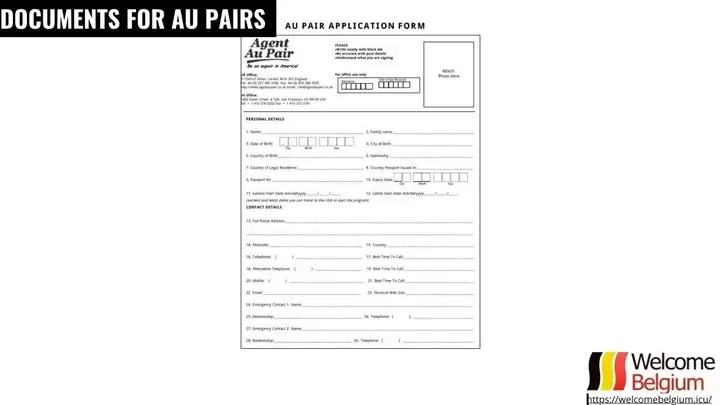
- Passport (validity +12 months): Your primary travel document must be valid for at least one year at the time of application, though experienced agents recommend a 15-month buffer. Ensure the passport has at least two blank pages and is free from any physical damage.
- Medical Certificate of the prescribed model: In 2026, this document is only accepted if issued by a doctor accredited by the Belgian Embassy in your country. The certificate confirms that you do not suffer from any diseases requiring quarantine or posing a threat to public health.
- Contract certified by the regional employment office: This is the original “Placement Agreement” bearing the official stamp of the immigration services of Flanders, Wallonia, or Brussels. Without this regional certification, the contract is legally void for visa purposes.
- Proof of enrollment in language courses in Belgium: An official document from a school (such as a CVO or a university language center) confirming your registration. The document must specify the course dates and intensity (at least 120 hours per semester or 2 sessions per week).
It is important to remember that in addition to this list, you will need a criminal record certificate with an apostille and a certified translation into one of Belgium’s official languages or English. Also, do not forget to include the proof of payment for the administrative fee (Contribution), as the consulate will not begin processing your case without this receipt. All documents not issued in French, Dutch, German, or English must be accompanied by an official translation.
💡 Alex’s Advice on the Checklist:
“Folks, here is my golden tip: make two full paper copies of your entire document package and save scans to the cloud. You’ll give one folder to the consulate, but keep the second one in your carry-on when you fly to Belgium. Sometimes, border police at Zaventem Airport ask to see your original contract or school confirmation right at passport control. Also, check your criminal record certificate—in 2026, it’s only considered ‘fresh’ for 6 months from the date of issue. If your family search took longer than expected, better order a new one so you don’t get turned away at the visa center door!”
Advantages, Disadvantages and Important Tips
The au pair program in Belgium is a good option for people who want to live in the country legally, improve their language skills, and experience life with a local family. However, it is important to understand that being an au pair is not a full-time job and not a direct path to a work permit. Participants depend on the host family, receive limited pocket money, and must follow the rules of the program. Before applying, it is important to evaluate both the benefits and the possible difficulties.
| Advantages | Disadvantages |
| Free accommodation and meals | Dependence on the relationship with the host family |
| Opportunity to learn the language in a real environment | Limited pocket money |
| Legal way to move to Belgium | Emotional stress and adaptation difficulties |
| Opportunity to travel within the EU | It may not always be easy to change host families |
| Better understanding of local culture and everyday life | You cannot simply switch to a work permit inside the country |
| Valuable international experience | You must follow the family’s schedule, rules, and responsibilities |
Before arriving, it is important to check the host family carefully: arrange several video calls, ask for a detailed description of responsibilities, clarify the schedule, living conditions, whether you will have a private room, and how many days off you will receive.
If conflicts appear after arrival, contact the agency or program coordinator immediately. In many cases, participants have the right to change families if the real conditions do not match the original agreement or if serious problems arise.
To adapt faster, it is helpful not to rely only on communication with the family. Language courses, sports clubs, expat communities, and local events can help you make friends and feel more confident in Belgium.
Conclusion and FAQ
The Au Pair program in Belgium is more than just a way to live in Europe; it is a legally defined cultural exchange. To ensure your stay is smooth and trouble-free, we have compiled answers to the most critical questions participants face in 2026.
Frequently Asked Questions (FAQ):
- Can I take on additional work (part-time in a café, delivery, etc.)?
Absolutely not. Your residence permit (Single Permit) is strictly tied to your status as an Au Pair and to your specific host family. Any external paid activity is considered illegal labor. In 2026, Belgian migration authorities actively monitor bank card activity and social security contributions; a violation will lead to the immediate cancellation of your visa and deportation, with a potential 5-year ban from the Schengen Area.
- Do I need a visa if I am from Ukraine or the EU?
EU citizens do not require a visa but must register with their local commune upon arrival to receive an E-card. For Ukrainian citizens in 2026, the situation depends on whether you hold Temporary Protection status (Annex 15/A-card). If you already have active protection in Belgium, you can sign an Au Pair contract without a Visa D, but you must notify your commune of the status change. If you are applying from abroad (e.g., from Ukraine or Poland) without existing protection, obtaining a National Visa D via the standard Au Pair procedure is mandatory.
- What happens at the end of the program (after 12 months)?
The Au Pair status in Belgium is valid for a maximum of one year and cannot be extended. At the end of the program, you have three main paths: return home, change your status to a Student Visa (by enrolling in a Belgian university and proving financial means), or switch to a Work Visa if you secure a job offer from a Belgian employer. You should begin the status change process at least 3 months before your ID card expires.
💡 Final Advice from Alex:
“Folks, congrats—you made it to the end! Belgium in 2026 is a land of opportunity if you play by the rules. Don’t try to ‘cheat’ with side jobs, and don’t skip those language classes—they are your safety net and your social capital.
Most importantly: don’t let a family turn you into a 24/7 nanny or a housekeeper. You are here for an exchange, not for servitude. If you feel like they’re ‘piling on’ extra work, say ‘no’ immediately and point to your contract. Stay confident, learn the language, and enjoy the country. Those Belgian beers and waffles won’t try themselves! Good luck, and see you in Brussels!”